Dynamic tariffs, energy sharing, flexible feed-in tariffs and structured B2B products are reshaping utility portfolios. But a promising product idea alone is not enough. Its success depends on whether it can be integrated into existing systems, billed reliably and scaled across a growing number of customers and metering points.
Together with freEnergy Consulting, we explored how business models in the German energy market are evolving and when different product categories are likely to reach market maturity. The resulting trend barometer shows that many innovative energy products are moving from isolated pilot projects towards scalable commercial offerings.
But what do utilities need to bring these products into real-world operations?
New energy products sit at the intersection of market prices, regulatory requirements, distributed energy assets and individual customer behaviour. Their underlying product logic is therefore considerably more complex than that of conventional fixed-price tariffs.
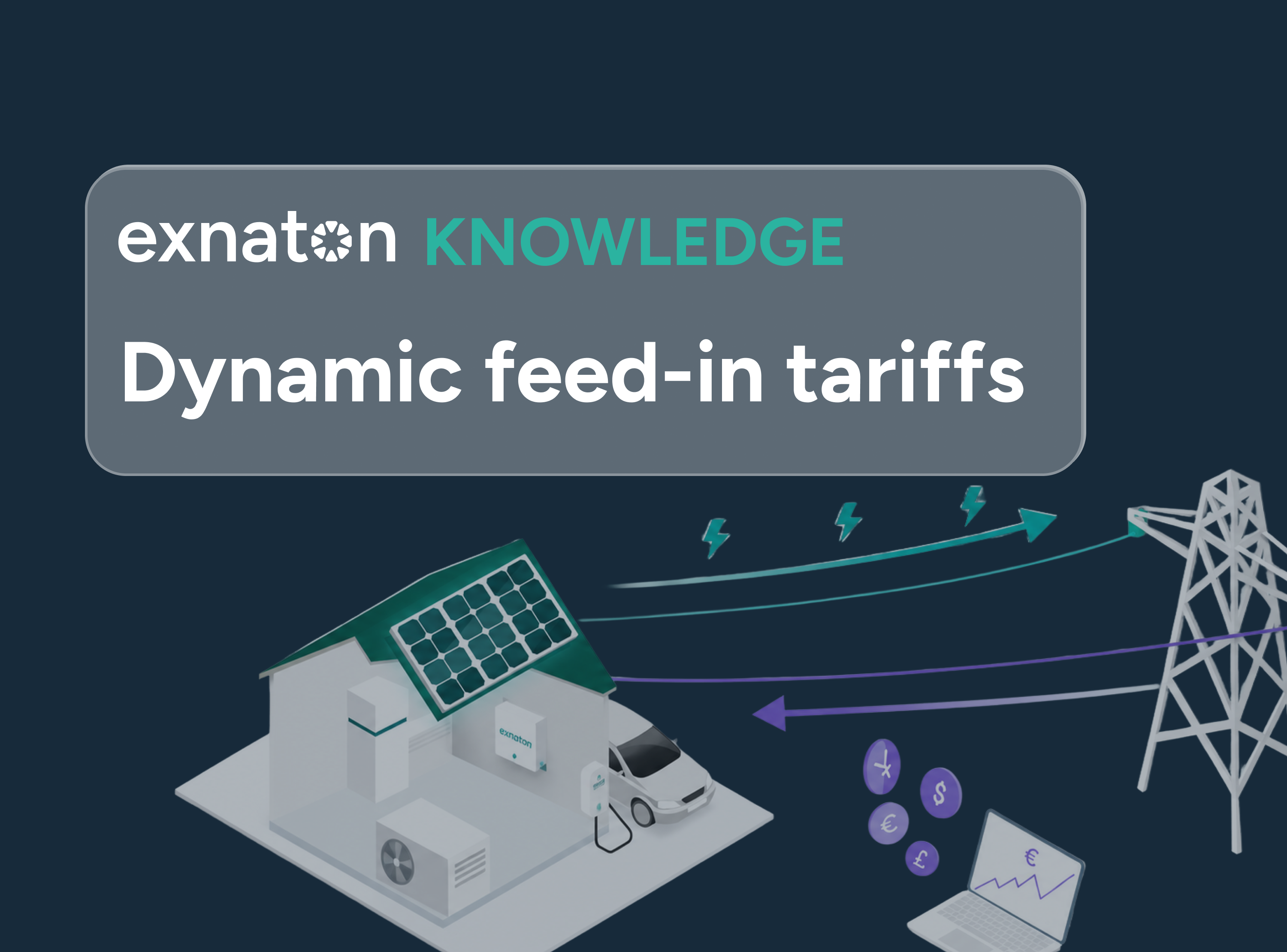
A dynamic tariff may combine spot-market prices, grid fees, taxes, supplier margins and price caps or floors. A prosumer product adds consumption, feed-in, battery storage, a photovoltaic system and potentially an electric vehicle. In an energy-sharing model, generation and consumption must also be allocated accurately among multiple participants over time.
To turn these concepts into viable offerings, utilities must answer several questions:
Only when these different layers work together does a product idea become a scalable business model.
Innovative energy products can rarely be represented by a single static tariff formula. Utilities need the flexibility to combine different price components, time series, billing intervals and customer-specific rules.
These may include:
Modular product logic allows utilities to launch an offering for a limited target group and expand it later without developing every new product from scratch.
Dynamic and flexible products depend on considerably more data than traditional electricity tariffs. Quarter-hourly meter readings, market prices, generation forecasts and asset data must be brought together and processed reliably.
Data quality therefore becomes a direct prerequisite for accurate billing and a good customer experience. Missing, inconsistent or implausible values should be identified early—before they result in incorrect invoices or time-consuming exception handling.
At the same time, utilities must retain a transparent record of which data and rules produced a particular price or billing result.
Introducing innovative energy products does not necessarily require utilities to replace their core systems. A specialised platform can operate as a modular intelligence layer between market, metering, CRM, ERP and billing systems.
It can, for example, handle:
This approach allows utilities to introduce new products step by step while continuing to use their existing IT landscape.
Billing becomes a decisive factor when a product moves from a pilot to a regular commercial offering. Manual calculations and individual workarounds may function for the first customers, but they quickly become expensive and error-prone as volumes increase.
A scalable solution must calculate different tariff models automatically, transfer the results to existing billing systems and document each calculation step transparently. This applies to dynamic tariffs as well as energy sharing, prosumer products and complex B2B contracts.
Not every energy product needs to launch immediately as a fully automated mass-market offering. A progressive approach is often more effective:
However, future scale should already be considered during the pilot. If product rules, integrations and billing processes are designed exclusively for a single test case, the transition to commercial operations often becomes a second—and significantly larger—implementation project.
Which business models can already scale today? Which still depend on regulatory or technical developments? And how might the energy-product landscape evolve through 2035?
Dr Liliane Ableitner, Co-Founder and CEO of exnaton, and Klaus Lohnert, Chief Strategist at freEnergy Consulting, examine these questions in their joint article:
The article introduces a trend barometer covering 25 product building blocks. It assesses the expected scaling potential of structured B2B products, dynamic tariffs, flexumer tariffs and energy sharing, among other emerging product categories.
The energy market is moving from standardised commodity tariffs towards a much more diverse product landscape. Success will not depend solely on identifying the right trends early. Utilities must also be able to translate them into operational products.
With flexible product logic, reliable data processing, modular integration and automated billing, utilities can test, launch and scale innovative energy products faster—without replacing their entire system landscape.
exnaton helps utilities integrate dynamic tariffs, energy sharing, prosumer products and complex B2B contracts into their existing systems and processes.