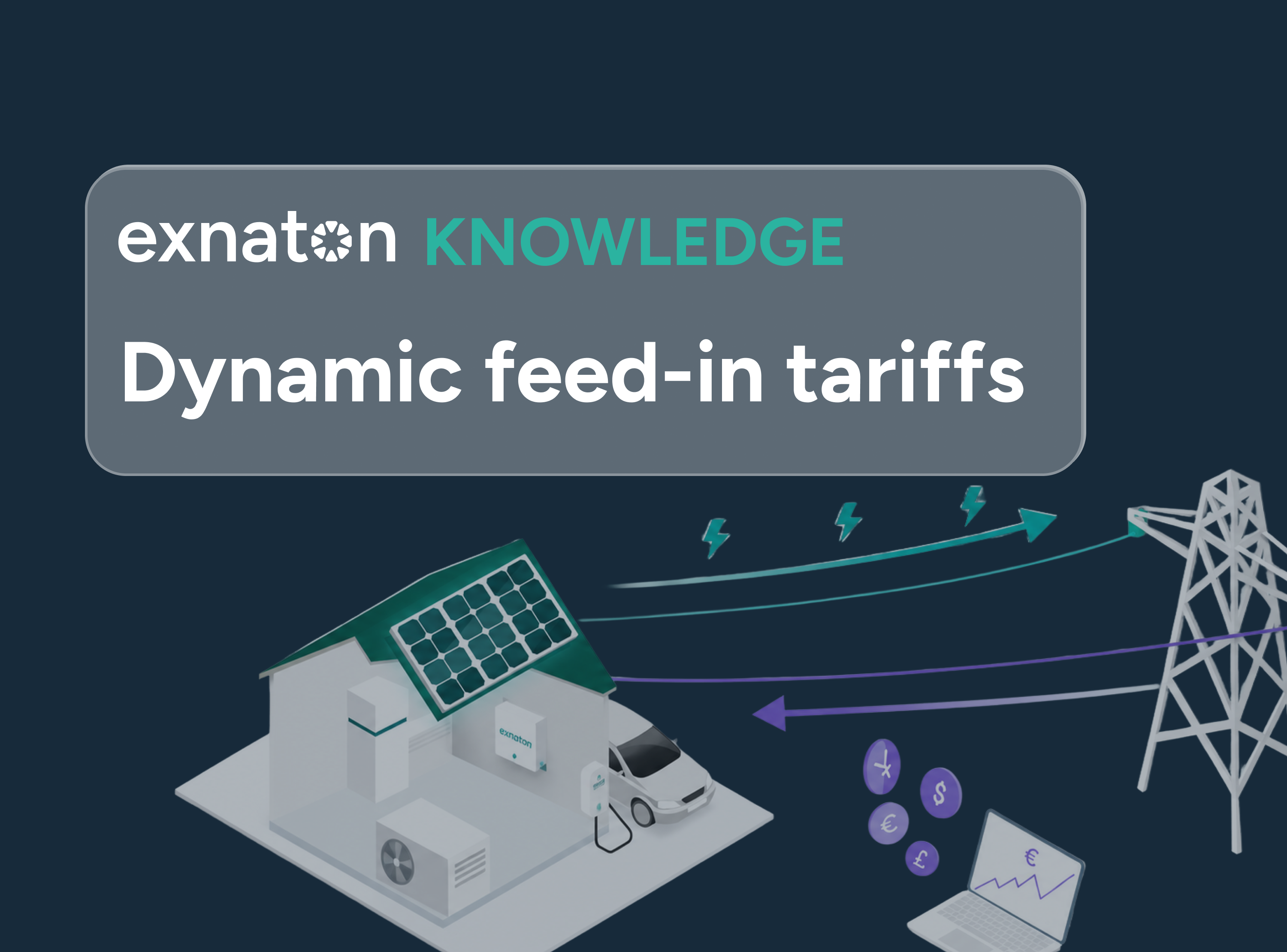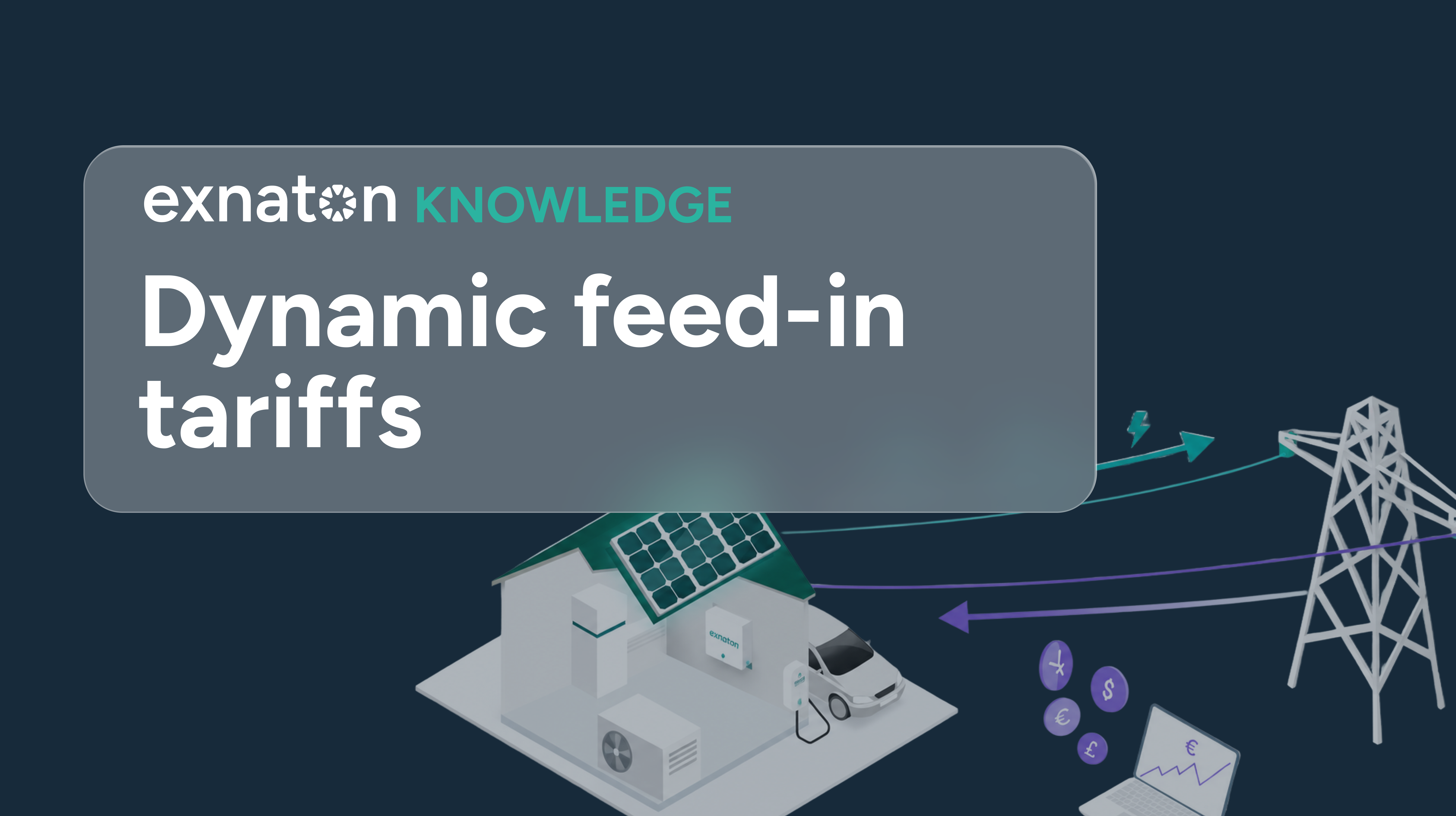

The rapid growth of residential solar, battery storage and electric vehicles is fundamentally changing the relationship between utilities and their customers. What was once a one-way flow of electricity has evolved into a dynamic exchange in which households not only consume electricity but also generate, store and increasingly optimize it.
For utilities, this shift creates both opportunities and challenges. Traditional feed-in tariffs were designed to accelerate renewable energy adoption by guaranteeing predictable compensation for exported electricity. While highly successful in driving PV deployment across Europe, these fixed remuneration models are becoming increasingly disconnected from today's electricity markets.
Wholesale prices now fluctuate hourly – or even every 15 minutes. Negative price events are becoming more frequent. Batteries and Home Energy Management Systems (HEMS) allow customers to shift when they export electricity. At the same time, European regulation is moving towards greater market integration and flexibility.
Against this backdrop, dynamic feed-in tariffs are emerging as more than simply a new remuneration model. They enable utilities to align customer incentives with real market conditions, unlock distributed flexibility and build the next generation of prosumer products.
Traditional feed-in tariffs were designed for an electricity system where renewable generation represented a relatively small share of overall supply. Their objective was straightforward: reduce investment risk by guaranteeing a fixed payment for every exported kilowatt-hour over many years.
The model worked remarkably well. Across Europe, feed-in tariffs accelerated renewable deployment, reduced technology costs and helped establish distributed solar as a mainstream energy resource.
However, today's electricity system operates under fundamentally different conditions.
Utilities are managing:
A tariff that adjusts annually – or only when legislation changes – can no longer reflect what electricity is actually worth in a given quarter-hour.
Instead, fixed tariffs often reward exports during periods when the grid is already oversupplied, providing little incentive for customers to shift generation or participate in flexibility services.
Germany illustrates this trend clearly.
Germany experienced approximately In 2025, wholesale electricity prices were negative for approximately 575 hours of negative electricity prices in 2025, with studies projecting this number could exceed 1,300 hours annually by 2032, even under optimistic battery deployment scenarios.
For utilities, this means traditional feed-in tariffs are becoming increasingly difficult to align with both market economics and grid requirements.
A dynamic feed-in tariff links export remuneration to wholesale electricity prices instead of paying a fixed rate.
At first glance, this may appear to be a pricing change.
In reality, it represents a much broader shift in product design.
Rather than simply paying customers for exported electricity, utilities can begin rewarding customers for exporting electricity when it provides the greatest value to the system.
This creates incentives for customers to:
For utilities, dynamic feed-in tariffs therefore become an important building block of a broader flexibility strategy – not merely another retail tariff.
What exnaton’s modelling clearly showed was that adding market-based export pricing creates significant value when combined with a battery and an energy management system.
The way that works is that the timing of export can be optimised. Instead of starting to fill up an empty battery in the morning, as soon as any surplus is being generated, dynamic feed-in tariffs tend to make batteries behave less dynamically. In fact, they make them have a longer sleep-in almost every morning. That way, the household may export energy already early in the morning, but that is when power prices are still relatively high. And this strategy prevents the battery from being already full during the most critical time for charging: when the mid-day solar peak creates negative prices in the market. So, with a dynamic feed-in tariff, the battery only starts charging later, making sure it can still absorb more energy when prices are the lowest or even negative, thereby effectively avoiding or at least minimising export at that critical time.
exnaton modelled a representative German household equipped with:
The simulations demonstrated that simply avoiding exports during negative-price periods delivers only limited financial benefits (8€ in our 2025 example).
The significantly larger value as compared to a scenario with a fixed feed-in tariff comes from the “sleep-in” effect described above: intelligently optimising battery charging and discharging around wholesale market prices also on the feed-in side and not just on the consumption side, yielded an extra 100€ per year. This value is not driven by a hardware change: simply switching the tariff from fixed to dynamic enables the savings. And these savings increase as market prices become more volatile.
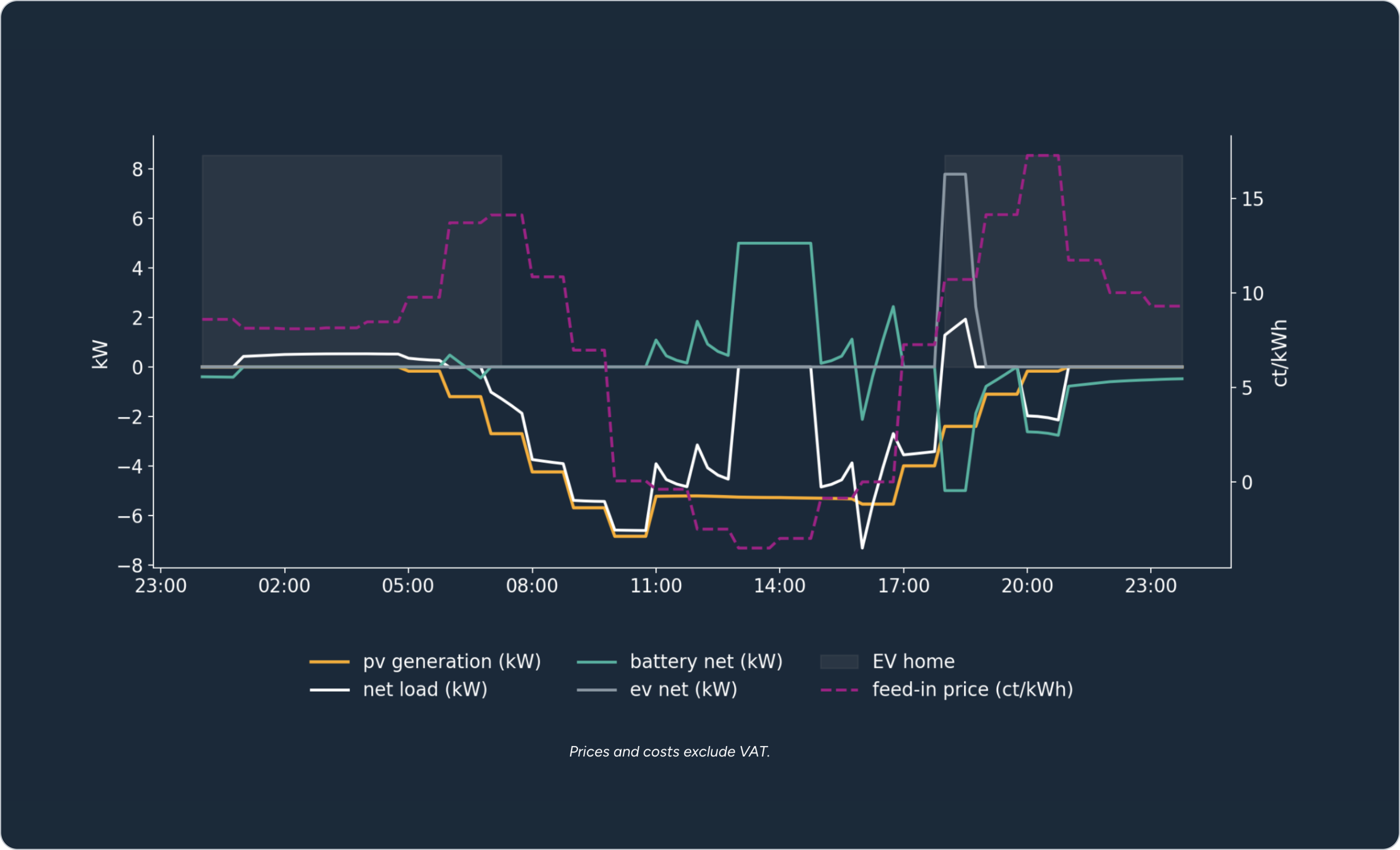
So, yesterday’s batteries primarily optimized self-consumption. Today’s batteries already actively participate in electricity markets by optimising dynamic consumption tariffs. And dynamic feed-in tariffs just added one more degree of freedom for batteries to optimise around.
In addition, Battery-to-Grid (B2G) allows stationary batteries to charge during low-price periods and actually export electricity back to the grid when prices increase.
Vehicle-to-Grid (V2G) extends the same concept to electric vehicles, effectively transforming millions of EV batteries into distributed flexibility assets.
For utilities, these technologies significantly expand the value proposition of dynamic feed-in tariffs.
Instead of compensating only solar generation, utilities can begin rewarding flexible storage assets that actively support balancing, congestion management and renewable integration.
As European regulatory frameworks evolve to remove barriers such as double charging of grid fees and levies, these business models are expected to become increasingly attractive.
One important consideration for utilities is that wholesale prices represent national market conditions – not necessarily local grid conditions.
A dynamic export tariff may correctly signal that electricity is valuable nationally while a particular distribution grid experiences local congestion due to high PV generation.
As distribution system operators introduce increasingly granular flexibility mechanisms and congestion management schemes, utilities should view today's dynamic feed-in tariffs as the foundation for future location-aware flexibility products rather than the final destination.
The long-term opportunity lies in combining market prices, local grid signals and automated customer flexibility within a single product offering.
Introducing a dynamic feed-in tariff requires considerably more than linking export remuneration to the day-ahead market.
Utilities need capabilities across four key areas.
1. Time-series data management
Managing interval meter data, market prices and distributed energy assets at 15-minute resolution.
2. Tariff intelligence
Supporting dynamic pricing formulas, export remuneration, settlement logic and future tariff innovation without increasing operational complexity.
3. Customer experience
Providing transparent visualisation of exports, earnings, price signals and flexibility outcomes to build trust and engagement.
4. Flexibility integration
Connecting batteries, HEMS, EV charging systems and future Vehicle-to-Grid capabilities to transform tariffs into automated flexibility services.
Rather than replacing existing billing systems, many utilities are choosing to introduce an intelligence layer capable of handling complex time-series calculations while integrating with their current IT landscape. This approach enables faster innovation without large-scale billing transformation projects.
Launching a prosumer tariff involves much more than defining a feed-in price. Utilities need to combine multiple energy flows, calculate self-consumption, process high-resolution meter data, apply different remuneration models, and integrate the results into existing billing and ERP systems. Without the right technology, these processes quickly become difficult to scale.
exnaton provides an end-to-end platform that simplifies the entire lifecycle of a prosumer product–from tariff configuration to settlement, billing, and customer communication.
Configure tariffs for self-consumption, residual grid consumption, and surplus feed-in on a single platform. Whether you're offering fixed remuneration, spot market prices, Time-of-Use tariffs, or dynamic electricity prices, exnaton enables utilities to build products that reflect changing market conditions and customer expectations.
Behind every prosumer tariff, exnaton automatically processes complex energy flows, including grid import, self-consumption, battery storage, and feed-in. The platform supports 15-minute interval settlement, ensuring accurate billing and remuneration based on high-resolution meter data.
Offer customers remuneration models that go beyond traditional feed-in tariffs. Utilities can implement spot-market-based procurement, dynamic feed-in pricing, or customized remuneration schemes while maintaining transparent billing and customer communication.
exnaton integrates seamlessly with existing ERP, CRM, billing, and metering systems, including SAP environments. Instead of replacing core utility systems, the platform delivers billable items, remuneration values, and tariff calculations directly into existing operational workflows.
Provide customers with a modern digital experience through an out-of-the-box white-label portal or embedded web components. Prosumers can easily monitor self-consumption, energy generation, feed-in, and remuneration, while AI-powered insights help explain invoices and recommend actions to maximize the value of their energy assets.
Prosumer tariffs are often the first step toward a broader flexibility strategy. exnaton enables utilities to combine prosumer products with dynamic tariffs, EV smart charging, home energy management systems (HEMS), batteries, heat pumps, and energy communities – all on a single intelligent platform. As regulations evolve and flexibility markets mature, utilities can expand their product portfolio without introducing additional point solutions.
Dynamic feed-in tariffs are not simply another retail electricity product.
They represent the convergence of market pricing, distributed flexibility, intelligent energy management and customer-centric product design.
Utilities that begin building these capabilities today will be better positioned to:
As renewable generation continues to grow, exported electricity becomes increasingly valuable not because every kilowatt-hour is equal, but because flexibility determines when that electricity delivers the greatest value to the grid.
For energy providers, dynamic feed-in tariffs are therefore more than an evolution of remuneration – they are an important foundation for the next generation of digital energy products.
The energy transition is changing not only how electricity is generated but also how it is valued.
Static feed-in tariffs were highly effective in accelerating solar adoption, but they were designed for an electricity system with relatively predictable generation patterns.
Today's grid is fundamentally different.
As renewable penetration increases, flexibility becomes just as valuable as generation itself.
Dynamic feed-in tariffs reward customers for providing that flexibility while helping utilities better balance supply and demand, integrate distributed energy resources, and prepare for a future shaped by batteries, electric vehicles and increasingly intelligent energy management.
For utilities, dynamic feed-in tariffs are not simply another pricing model – they represent an important building block in the next generation of customer-centric energy products.
Interested in launching dynamic feed-in tariffs? Contact us.
No. While direct marketing initially focused on larger PV systems, regulatory developments increasingly aim to make dynamic export models accessible for residential prosumers as well.
Potentially yes, if electricity is exported during negative price periods. However, smart energy management systems can automatically reduce exports, store electricity, or shift flexibility to minimise this risk.
No. Dynamic feed-in tariffs already reflect real market prices without storage. However, batteries significantly increase the ability to optimize exports and improve overall financial performance.
Not today. However, as bidirectional charging becomes more widely available, V2G will further enhance the value of dynamic feed-in tariffs by turning EV batteries into flexible grid assets.