
EV Smart Charging for Utilities
Launch intelligent EV charging products under your own brand.Offer automated, price-optimised EV charging based on real-time electricity prices and renewable energy availability. Launch a white-label solution that helps customers save money, supports grid flexibility, and creates new revenue opportunities.
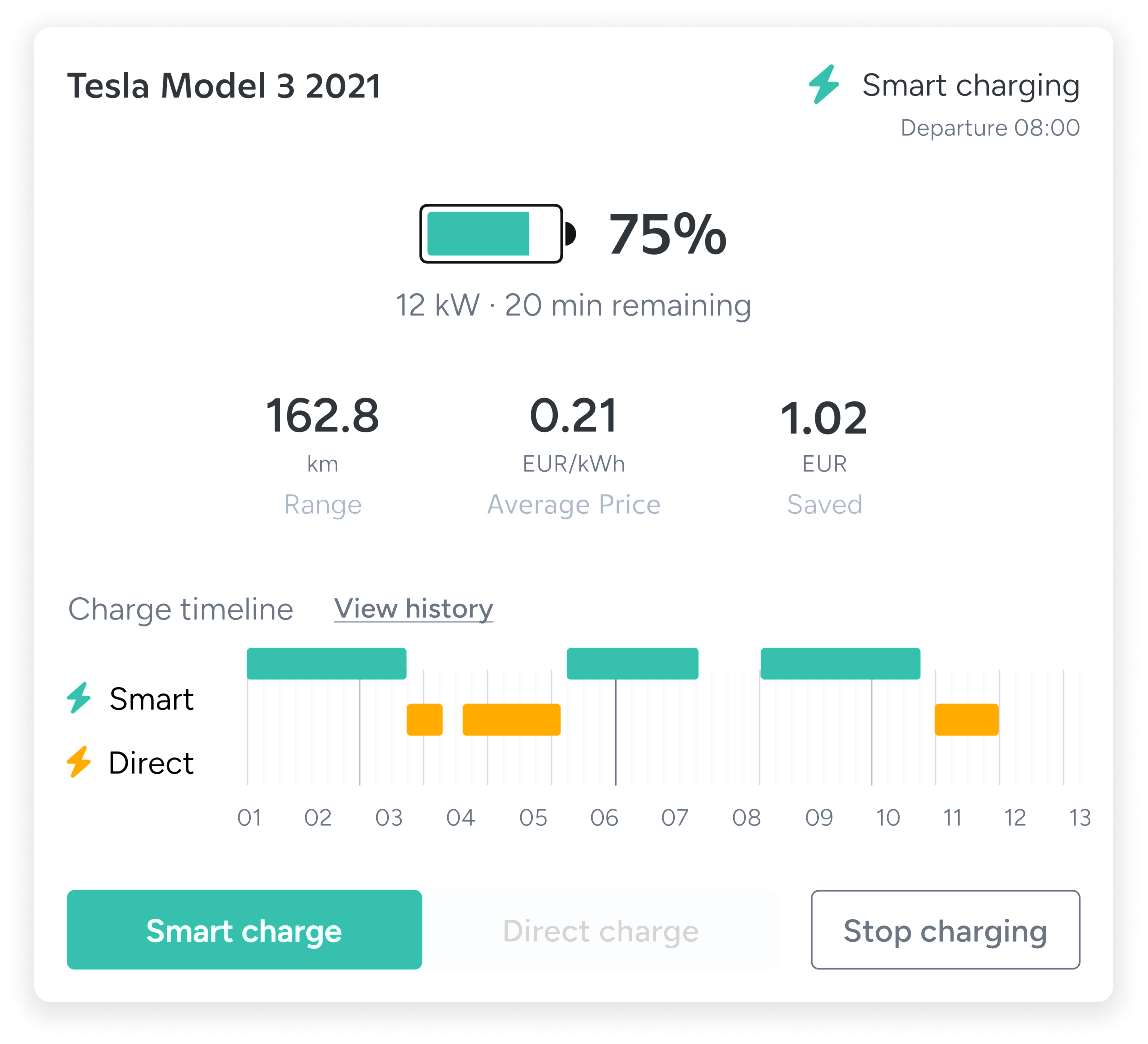


Launch intelligent EV charging products in weeks
Deploy a white-label EV charging solution that integrates seamlessly with your existing utility landscape. Connect 900+ EV models without additional hardware and automatically optimise charging based on electricity prices and renewable energy availability. Help customers save while unlocking new revenue and flexibility opportunities.
Trusted by 50+ utilities




Turn EV charging into a competitive advantage
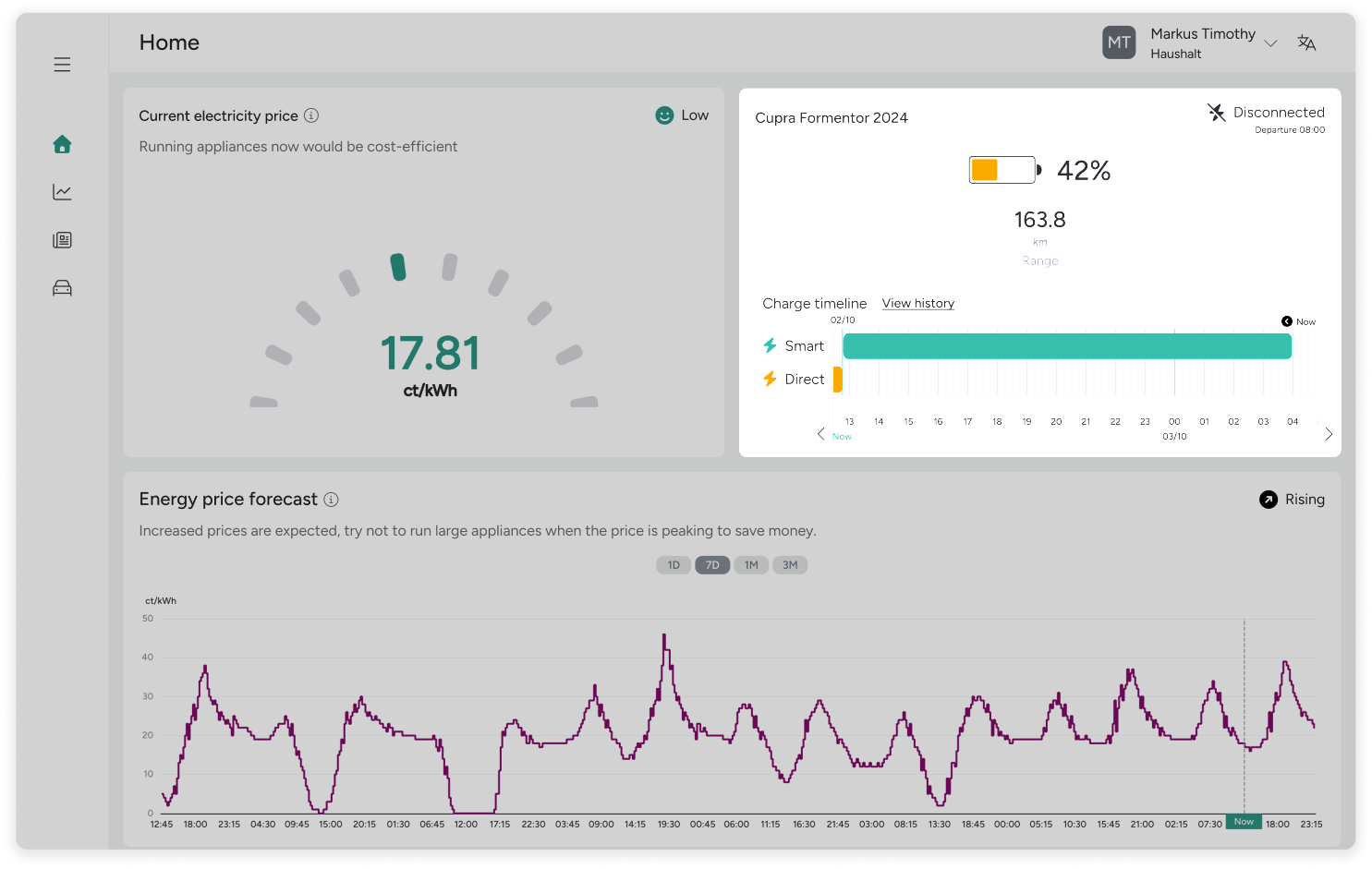
Launch EV charging products faster
Bring intelligent EV charging to market without a lengthy implementation project.
Deploy an out-of-the-box white-label web app, or embed ready-made web components into your existing customer portal.
Activate smart charging per account and sell it as an add-on — only customers who book it see it.
Onboard customers in minutes — they connect the car themselves, with no installer visit and no hardware.
Support more than 900 EV models across 30+ manufacturers.
Start with exnaton's customer portal and migrate to your own experience whenever you're ready.
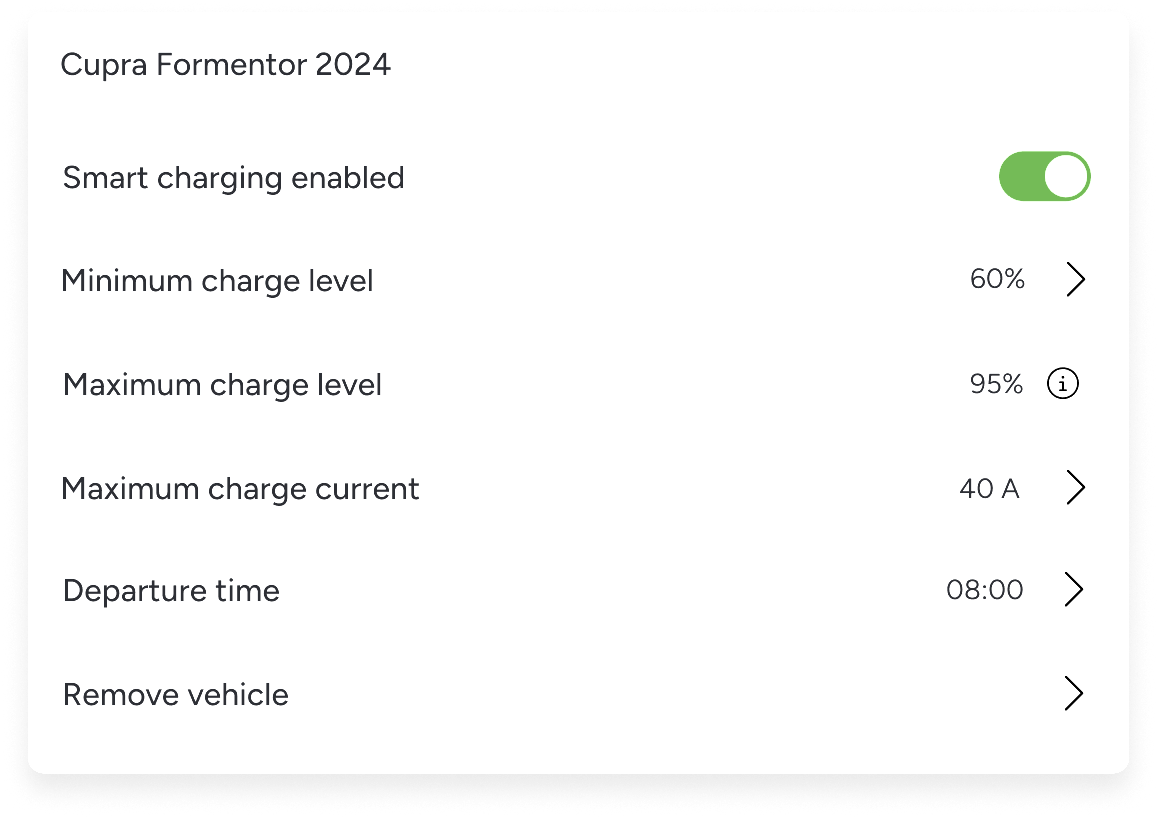
Set it once, the system does the rest
Your customers say when the car has to be ready — the optimisation runs in the background from there.
Optimise charging against dynamic electricity prices or your own pricing models.
Let customers set departure time, minimum battery level and charging preferences.
Manage charging remotely through a mobile-friendly interface.
Reduce customer energy costs while improving satisfaction and retention.
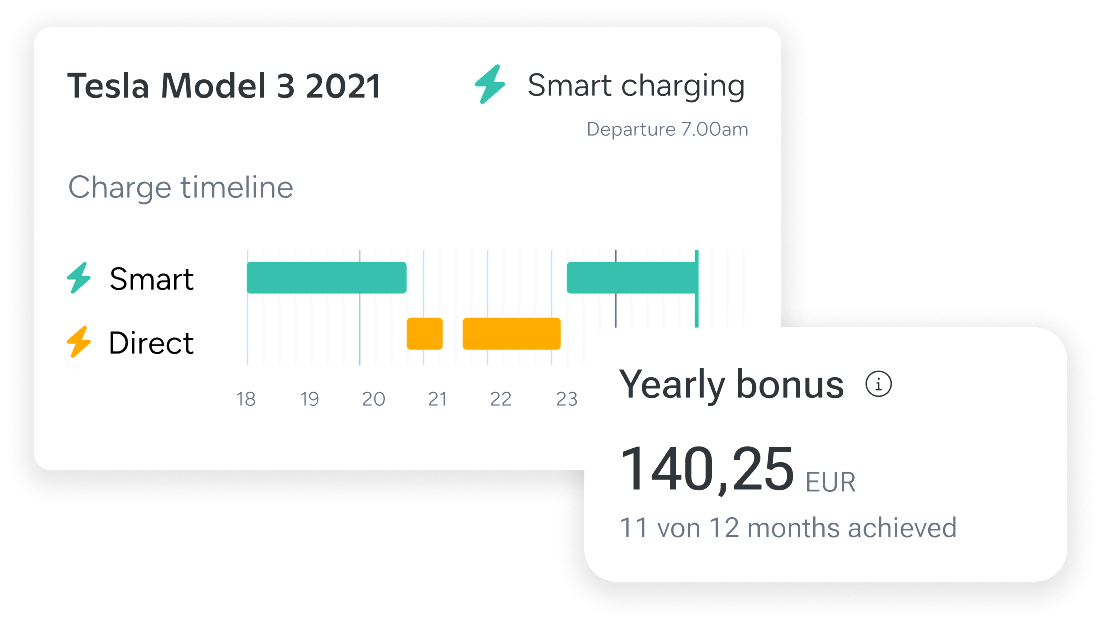
Fix-price smart charging: reach the customers who prefer a fixed price
Most of your book is on a fixed-price tariff.
Keep the customer on a fixed price per kWh — no market volatility, no tariff switch, no price-risk conversation.
Optimise their charging against day-ahead and intraday prices, and use the resulting flexibility in your own trading.
Reward participation with a bonus you define: a fixed monthly amount, or tied to the volume charged under optimisation.
Receive aggregated charging schedules and realised actuals per asset pool for portfolio management and reconciliation.
Unlock flexibility across your existing base instead of waiting for it to migrate to dynamic tariffs.
Solar charging: from the customer's own roof before the grid
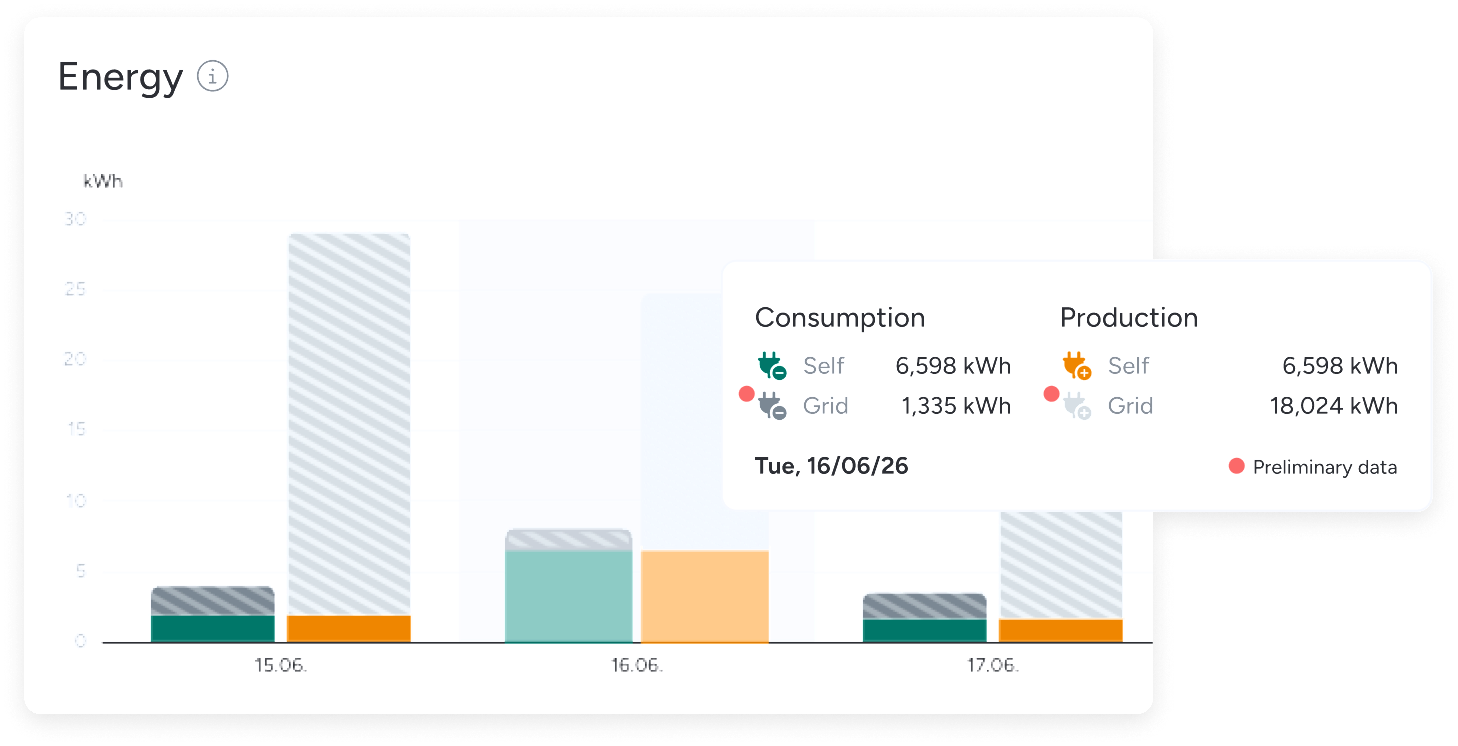
The cheapest kilowatt-hour a customer has is the one from their own PV system.
Prioritise self-generated solar before drawing anything from the grid.
Raise self-consumption instead of exporting surplus at low feed-in compensation and buying it back at retail price.
Fall back automatically to the cheapest grid hours when the roof can't cover the session.
Run on existing PV and metering data — no additional hardware at the customer's home.
Give prosumers a visible return on the system they already paid for, and a reason to bring their EV to you too.
Create new energy products and revenue streams
Turn EV charging into a differentiated retail offering.
Launch dynamic charging tariffs, managed charging or solar-optimised charging products.
Sell smart charging as a bookable add-on, activated per customer.
Combine EV charging with dynamic household tariffs, energy communities and demand-side management.
Expand into flexibility services as market requirements evolve.
Differentiate your offering without replacing your existing systems.
Turn charging into a flexibility asset
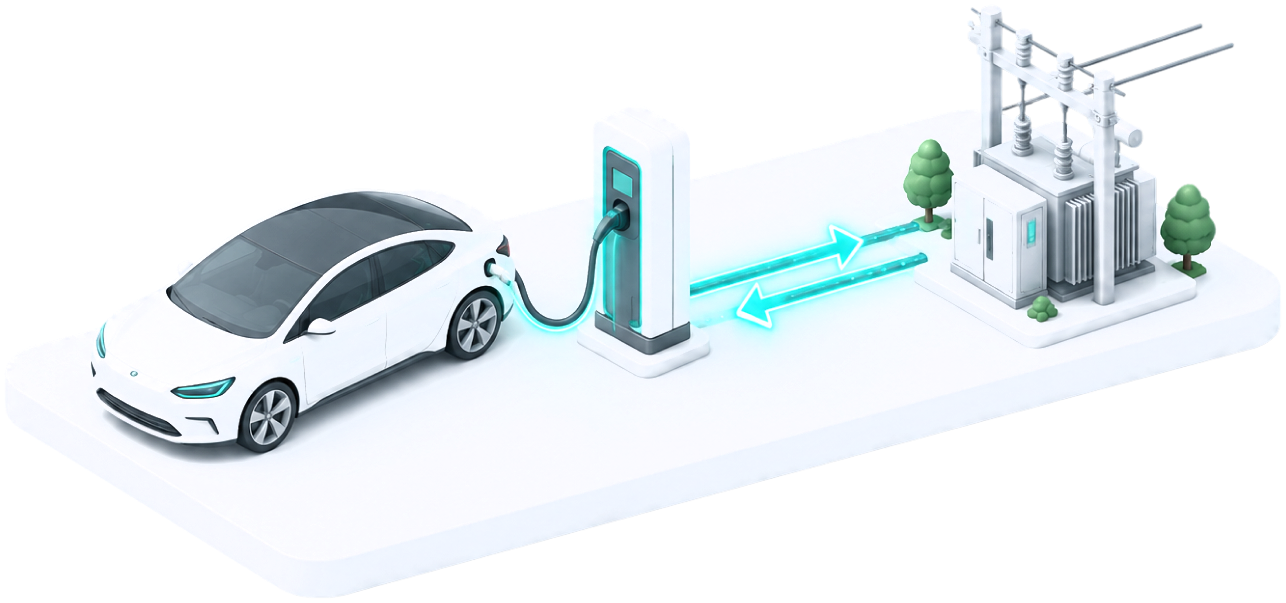
Influence when thousands of vehicles draw power, without owning the hardware.
Shift charging to periods of lower prices or high renewable generation.
Reduce peak demand and local grid congestion.
Encourage customer flexibility through automated price signals rather than direct control.
Build the foundation for future flexibility services, including V2G and demand response.
Go live on the systems you already have
In most cases exnaton is already connected — and already knows what the customer pays.
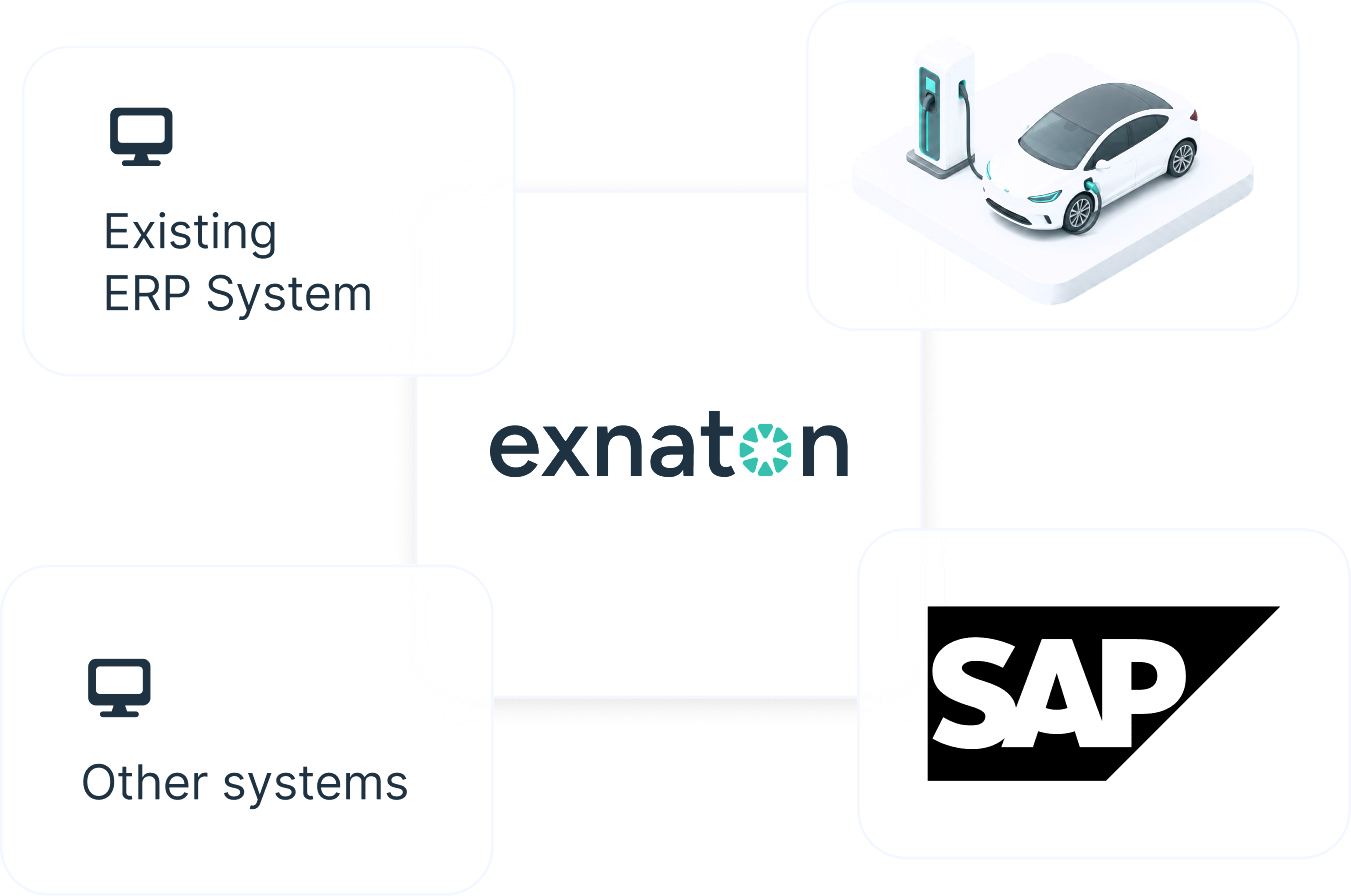
Where exnaton runs your tariffing and pre-billing for SAP, powercloud or another core system, the customer's tariff is already in place and is handed straight to the car.
Connects to your ERP, CRM, billing and metering systems, including SAP IS-U and SAP S/4HANA Utilities, without replacing them.
Charging volumes and schedules flow back as billable items and aggregated data for portfolio management.
Equip service teams with a user-friendly administration portal.
Scale as EV adoption and charging volumes grow.
Everything you need to launch smart EV charging
900+ EV models from more than 30 manufacturers, BEV and PHEV, connected through the customer's manufacturer account.
No additional hardware required: a purely software-based connection via the Enode integration; no wallbox, no installer, no retrofit.
Schedules charging based on the assigned tariff: market-based, time-of-use, local, community, or fixed with a flexibility bonus.
Solar charging: charges from the customer's PV surplus before the grid, falling back to the cheapest grid hours.
Fix-price smart charging: customers keep a fixed price per kWh while their charging is optimised against day-ahead and intraday for your trading position.
Enabled per customer, so smart charging can be sold as an add-on and is only visible to customers who booked it.
Widget and dedicated page showing charging state, schedule, history, kWh delivered, average price and savings.
Customer-set preferences: departure time, minimum charge level and charging location per vehicle, with several vehicles per customer.
One-tap override: customers can switch to direct charging or pause smart charging at any time without losing the setup.
Your brand across web and mobile, either as the exnaton app (extendable via SSO) or embedded in your existing portal.
Works with SAP IS-U, SAP S/4HANA Utilities and other core systems without replacing them; billable items flow back automatically.
Charging volumes, schedules and realised actuals per asset pool, available via API for portfolio management.
Ready to launch smart EV charging?
Empower your customers to charge at the right time while unlocking new revenue, increasing loyalty and supporting grid flexibility. Discover how exnaton can bring your EV charging product to market faster.
Frequently asked questions
What is EV Smart Charging?
EV smart charging automatically schedules or adjusts electric vehicle charging based on electricity prices, renewable generation, grid conditions or customer preferences. For a utility it enables intelligent charging tariffs that reduce peak demand while helping customers lower their charging costs.
How does smart charging benefit utilities?
It lets utilities launch differentiated charging tariffs, increase loyalty through a service customers use daily, reduce grid congestion by shifting charging off-peak, and open flexibility and revenue opportunities — without replacing existing billing systems.
How does dynamic EV charging work?
Dynamic charging uses real-time or time-based electricity prices to determine the optimal schedule. The customer defines when the vehicle must be ready and the battery level they need; the platform charges during the most cost-effective periods.
Can charging be optimised for customers' own solar production?
Yes. exnatonCHARGE can prioritise self-generated PV electricity before drawing from the grid, and fall back to the cheapest grid hours when the roof can't cover the session. This raises self-consumption instead of exporting surplus at low feed-in compensation, and runs on existing PV and metering data.
Does smart charging also work for customers on a fixed-price tariff?
Yes — and this is where most of the addressable base sits. The customer keeps a fixed price per kWh with no exposure to market volatility and no tariff switch, while their charging is optimised against day-ahead and intraday prices so the utility can use that flexibility in its own trading. Participation is rewarded with a bonus, which the utility defines — a fixed monthly amount, or tied to the volume charged under optimisation.
Can utilities control which customers get smart charging?
Yes. Smart charging is activated per customer account, so it only appears for customers who have booked it on the portal — not for your whole base. That lets you offer it as a paid or bundled add-on, and those customers are then prompted to connect a vehicle themselves.
What is charging optimised against?
The tariff assigned to the customer. Because every product on the exnaton platform is expressed as a tariff, charging follows whatever that customer is actually on — a market-based or spot tariff, a time-of-use tariff, a local or community dynamic price, or a fixed price combined with a flexibility bonus. Nothing has to be configured per customer beyond the tariff they already have, so one platform serves customers on very different tariff models at the same time.
Which electric vehicles are supported with exnaton for smart charging?
More than 900 models from over 30 manufacturers, with no additional hardware for compatible vehicles. Both battery-electric and plug-in hybrid vehicles are supported.
What do customers need to use smart charging?
A compatible vehicle, an internet connection at the charging location, and a tariff the charging can be optimised against. The customer registers the location of their charging point, and optimisation applies within a defined radius of that address — charging elsewhere still works, but the financial benefit follows the tariff of the meter the car actually charges through. A wallbox is optional and only affects charging speed.
Does exnaton integrate with existing utility systems for smart charging?
Yes. exnaton integrates with existing ERP, CRM, billing and metering systems, including SAP IS-U and SAP S/4HANA Utilities, without replacing the existing IT landscape.
Can utilities offer EV charging under their own brand?
Yes. The solution is available as a white-label web application and can be embedded into existing customer portals using web components, for a seamless branded experience.
Can EV Smart Charging be combined with dynamic tariffs?
Yes. It works alongside dynamic tariffs, time-of-use tariffs, demand-side management and energy communities, so utilities can offer bundled energy products on one platform.
Does EV Smart Charging prepare utilities for V2G?
Smart charging provides the foundation for future flexibility services, including vehicle-to-grid, demand response and virtual power plants, as those markets mature.
How can utilities launch EV Smart Charging without replacing their billing system?
By integrating the exnaton platform with existing ERP, billing, CRM and metering systems. Utilities introduce intelligent charging products while preserving their current IT investments.