
As energy systems become more decentralized and dynamic, utilities are facing a growing challenge: how to turn increasing operational complexity into scalable, customer-facing products.
Energy communities, flexible tariffs, and digital customer journeys are no longer experimental. They are becoming core components of modern energy offerings. But behind every new product lies a layer of operational processes that must work seamlessly.
With our latest product updates, we focused on exactly that — simplifying the complexity behind the scenes while enabling more flexibility on the surface.
While end users expect simplicity and transparency, utilities must manage an increasingly complex ecosystem of participants, metering points, and market processes.
Energy communities are a clear example of this challenge. Scaling them requires efficient and transparent registration processes — without adding operational overhead.
In February 2026, we introduced a completely redesigned registration module for energy communities, built to reduce friction across these workflows.
Instead of treating onboarding as a manual, fragmented process, the new module streamlines how participants are registered and managed within the system.
The improvements focus on three key areas:
Together, these changes make it significantly easier for utilities to scale energy communities while maintaining control over operational processes.
For teams working with registrations daily, this means fewer bottlenecks, clearer workflows, and faster onboarding.
Beyond large structural improvements, small workflow optimizations can have a meaningful impact on daily operations.
For users with Single Sign-On (SSO), accessing the Back-Office Admin is now more direct. A new Admin link in the user menu provides a shortcut to the login page, reducing unnecessary navigation steps.
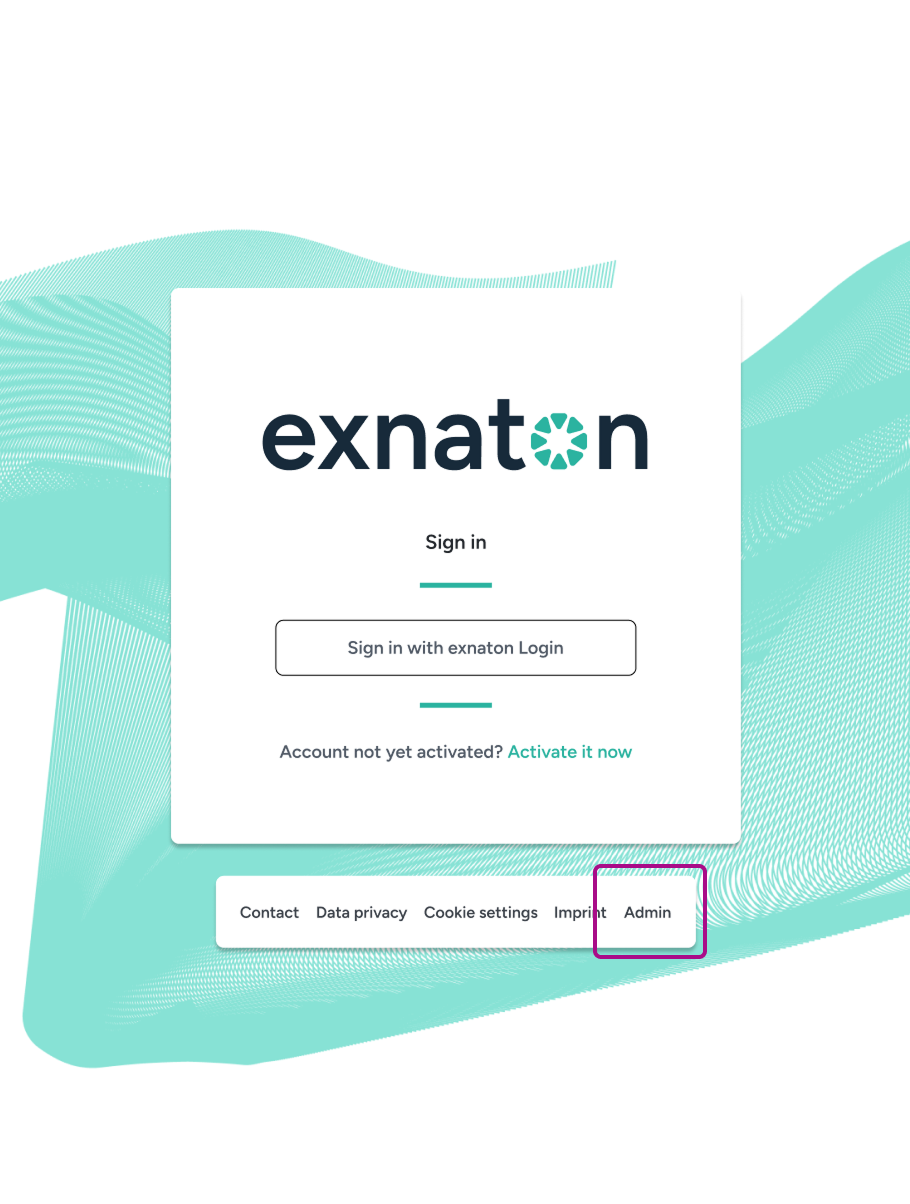
It’s a simple change — but one aligned with a broader principle: operational tools should be as efficient as the systems they support.
As utilities expand their product portfolios, tariff structures are becoming more sophisticated. Different customer journeys often require different pricing models — including setup and closing fees.
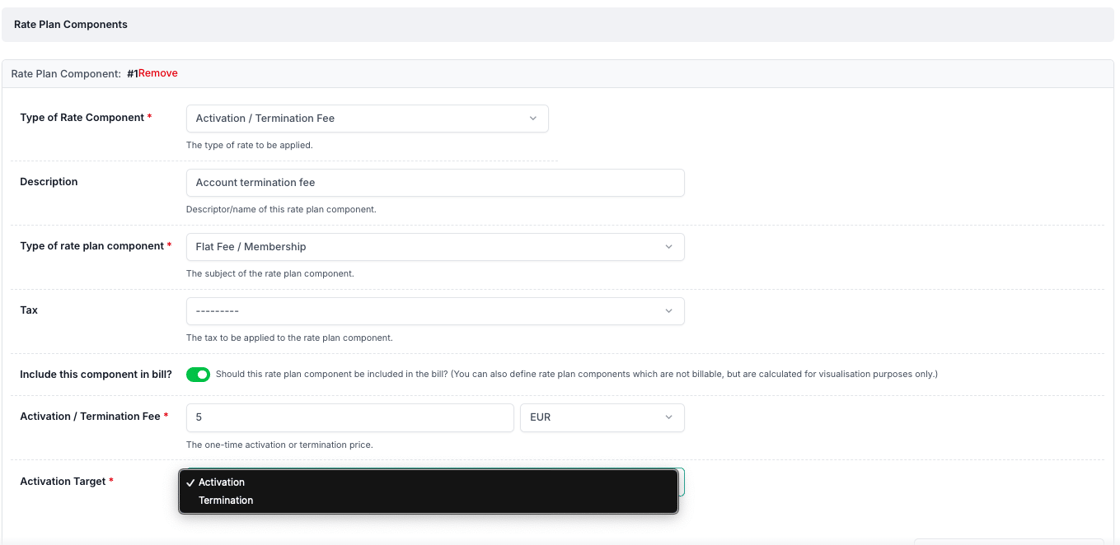
With the latest update to the exnaton Tariff Editor, utilities can now define one-time tariff components that are triggered when an account is activated or terminated.
This allows for:
By enabling one-time fee billing, utilities gain more control over how tariffs reflect the full customer journey — not just ongoing consumption.
As energy communities continue to grow — particularly in Austria — visibility and accessibility are becoming key success factors.
To support this, we are introducing Public Community Profiles and Membership Requests, a new service designed to simplify how new members discover and join energy communities.
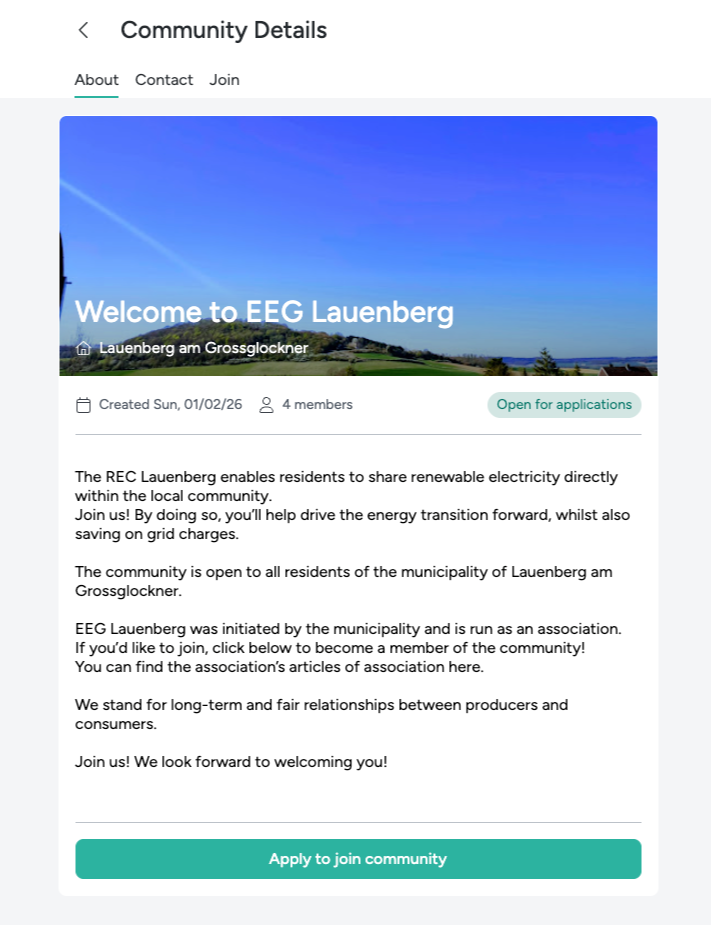
The rollout will begin in Austria, where the feature will be available for all energy communities starting in early May 2026, with expansion to additional markets planned.
With this update, energy communities will be able to:
Customers in Austria who are interested can already begin submitting the required information for their public pages via support tickets.
Across all updates, a clear direction emerges: bridging the gap between system complexity and usability.
The energy transition is making the system more dynamic, decentralized, and data-driven. Discover how exnaton can help you launch smart, data-driven energy products – fast. Contact us.