
AI is not just another technology trend — it’s the foundation of the next-generation energy system.
At exnaton, we believe we’re not just at a pivotal moment — we’re at a tipping point.
Artificial intelligence (AI) is poised to revolutionize how energy is produced, distributed, billed, and consumed.
Our October 2025 AI Readiness survey during the exnaton CONFERENCE among 90+ European utilities revealed: Almost 50% rated their organization’s AI readiness as high (4–5 on a 5-point scale).
.png)
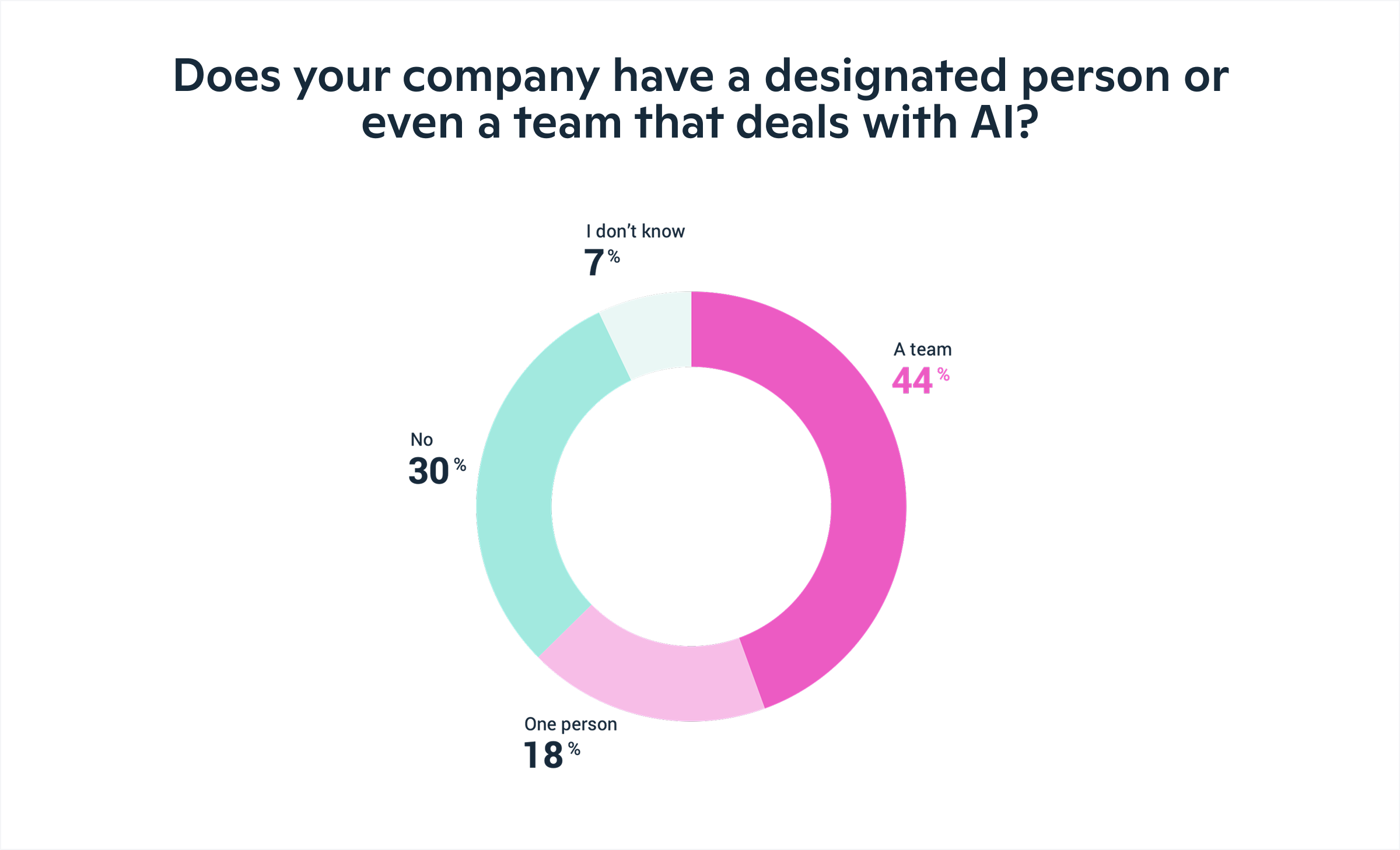
Over 60% of respondents said their company either have a dedicated person or team for AI implementation.
Those who act now, modernizing their IT architecture, embracing real-time data, and integrating AI into their workflows — will define the energy market of the next decade. Those who wait will be left behind by faster, smarter “neo-utilities” already setting new standards.
“The hype may fade, but AI’s impact on our industry is only beginning,” says Liliane Ableitner, CEO of exnaton. “Utilities that move first on AI integration will shape the market for decades to come.”
Electricity demand is surging — driven by EVs, heat pumps, and now AI data centers that power the world’s growing intelligence infrastructure.
Globally, electricity demand from data centers is expected to more than double by 2030, with AI-related facilities soon consuming more power than traditional heavy industries like steel and cement.
However, most utilities still operate on:
The business case for modernization is clear but the execution gap remains large.
“From what we see working with European utilities,” Liliane notes, “the challenge isn’t awareness — it’s execution. Legacy procurement cycles slow down transformation, even when the benefits are obvious.”
AI’s power lies in turning complexity into simplicity. It automates what’s repetitive, predicts what’s next, and personalizes what matters.
Its most transformative use cases are already reshaping utility operations today:
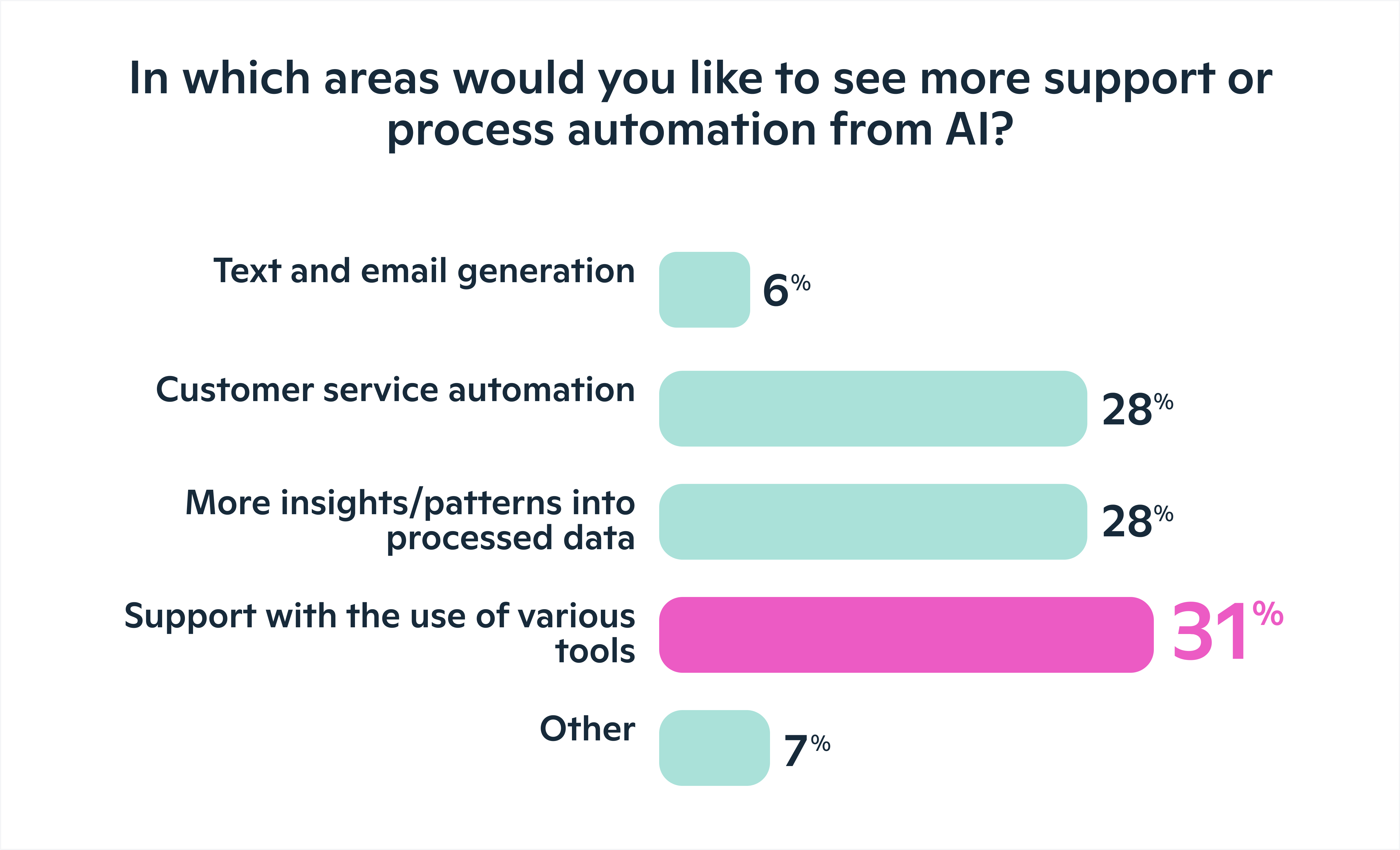
Top 3 areas utilities want more AI support in, according to our survey:
It’s already becoming clear that a strong pattern is emerging: AI tools only work well when they are properly connected with each other.
For example, in customer service automation, a chatbot needs to be connected to a knowledge base so it can retrieve reliable information and deliver meaningful insights. In many cases, it must also integrate with other internal systems — such as asset management applications — to provide accurate, context-specific answers.
In short: interoperability between tools is essential.
However, it’s not all smooth and easy. There are several challenges we need to acknowledge.
The first is that AI can sometimes produce superficial or incorrect results — something we’ve all seen when interacting with tools like ChatGPT. Mistakes, hallucinations, and made-up information still happen. This means that feeding models with the right, high-quality data is crucial for getting better answers.
But improving data quality also raises concerns around privacy. We need to strike the right balance between leveraging data to improve AI performance and ensuring that sensitive information remains protected.
At exnaton, for example, whenever we work with data that could be sensitive, we prefer to run these processes locally rather than in the cloud. This allows us to benefit from AI while keeping data privacy and security at the highest possible standard.
We clearly see that the real value of AI comes from its ability to access a company’s own data and learn from it. One of the key concepts in the AI world is the context window — essentially everything we provide to a model like ChatGPT to help it generate accurate answers.
This includes the quality of the prompt, access to internal documents, access to the internet, and connections to various tools.
All of this together forms the model’s context. And the richer and more relevant that context is, the better and more precise the answers will be.
For many utilities, adopting AI sounds promising but can be difficult to put into practice — and this challenge isn’t unique to the energy sector.
Traditional companies struggle largely because of legacy infrastructure. Many still rely on on-premise systems where data is hard to access due to outdated database technologies. This makes real-time data retrieval challenging, which in turn makes forecasting extremely difficult. Add to this the fact that different teams often use different tools that don’t integrate well, and it becomes clear why creating a central, AI-ready environment is so complex.
To unlock AI’s potential, utilities must build digital infrastructure first. AI is not plug-and-play — it’s infrastructure-dependent.
That means:
When all these foundational elements are in place, the potential becomes enormous.
With meter data analytics, utilities can understand consumption behavior — for instance, identifying when customers are charging their EVs at the most expensive hour of the day. This creates insights for billing, cost optimization, and product development. Many operational processes can be automated, reducing manual work and freeing up teams to focus on tasks that create the most value. Improved customer experience ultimately leads to higher satisfaction, stronger retention, and new revenue streams.
Introducing MCP is another important concept. MCP provides a standardized way for applications and AI agents to communicate — like a universal plug (a USB-C for software). With MCP, tools speak the same “language,” exchanging information through a common interface.
Without MCP, every system needs its own custom connection. With MCP, everything plugs into one shared interface, reducing complexity, risk, and errors.
At our conference, we asked participants about MCP, and 90% shared that they had not yet heard of it or implemented it. This shows that MCP is still in the awareness phase — but it’s coming, and for organizations planning to do more with AI, it’s definitely a technology to keep on the radar.

As Liliane explained during the conference:
“We can’t expect meaningful AI output if our input isn’t digitalized. We first need to know what’s happening today before we can predict tomorrow.”
exnaton’s intelligence platform is built to help utilities transition from reactive operations to proactive, data-driven energy management. Based on decades-old systems, many utilities still operate in fragmented environments: siloed tools, on-premise databases, limited data access, and little to no real-time visibility.
exnaton bridges this gap — transforming legacy infrastructure into an AI-ready foundation.
These aren’t “AI theoretical pilots.” These tools are already reducing manual workload, accelerating operations, and unlocking real efficiency today.
Among all use cases, billing is where utilities will feel the impact of AI first — and strongest.
It’s also where inefficiencies are most expensive: incomplete metering data, manual corrections, regulatory complexity, and endless back-office troubleshooting.
Our survey confirmed this: billing automation and data validation ranked highest among areas where utilities seek AI-driven support.
exnaton’s AI-driven billing engine supports:
“Billing shouldn’t be an annual event,” says Liliane. “It should be a continuous data flow — 35,000 data points per household, per year. Only then can dynamic pricing and flexibility become real.”
With time-of-use tariffs and prosumer models accelerating, AI-powered billing will soon become the core of utility monetization.
AI is reshaping how utilities forecast demand, optimize flexibility, and serve customers..
Our poll showed utilities’ biggest internal concerns are:
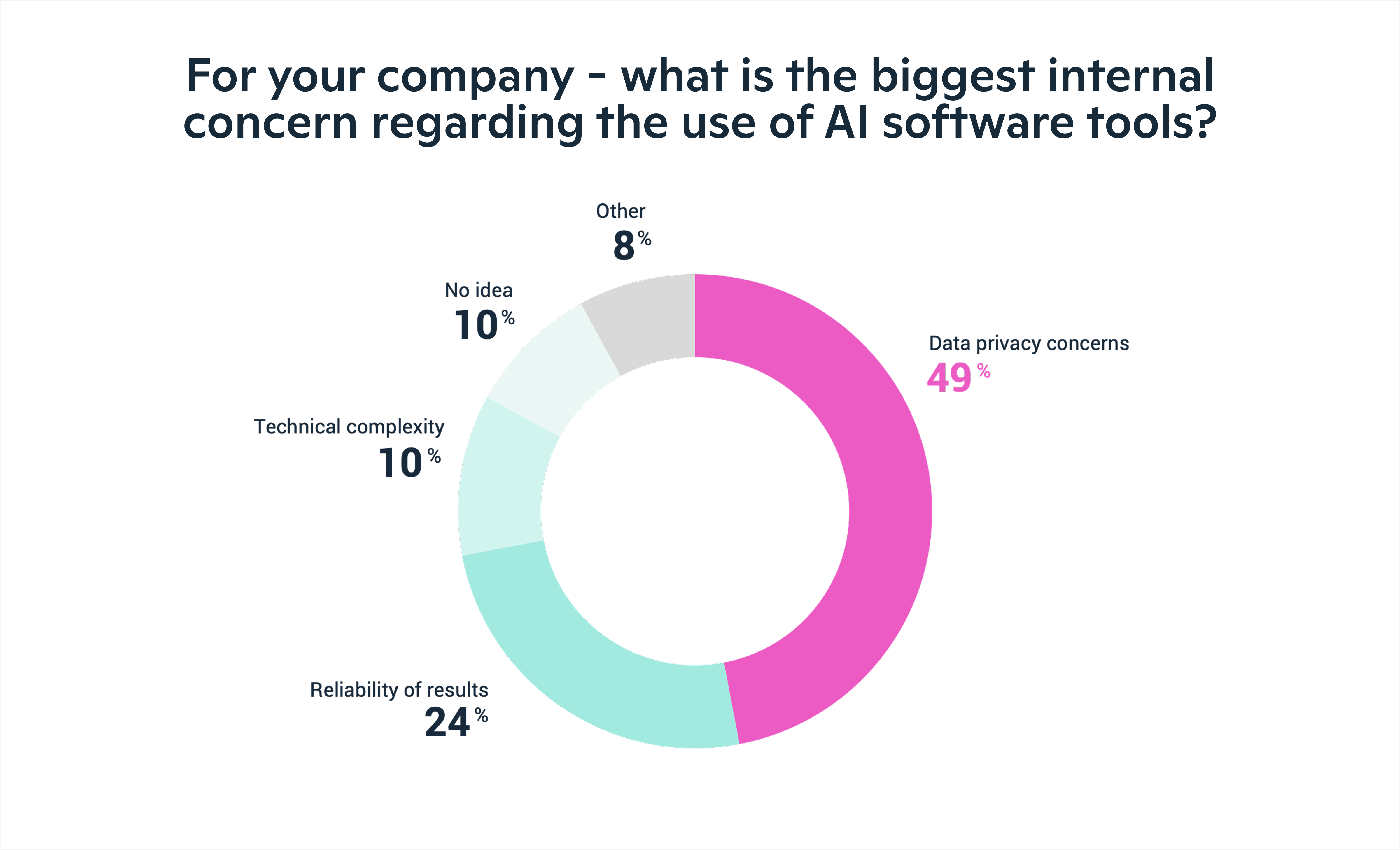
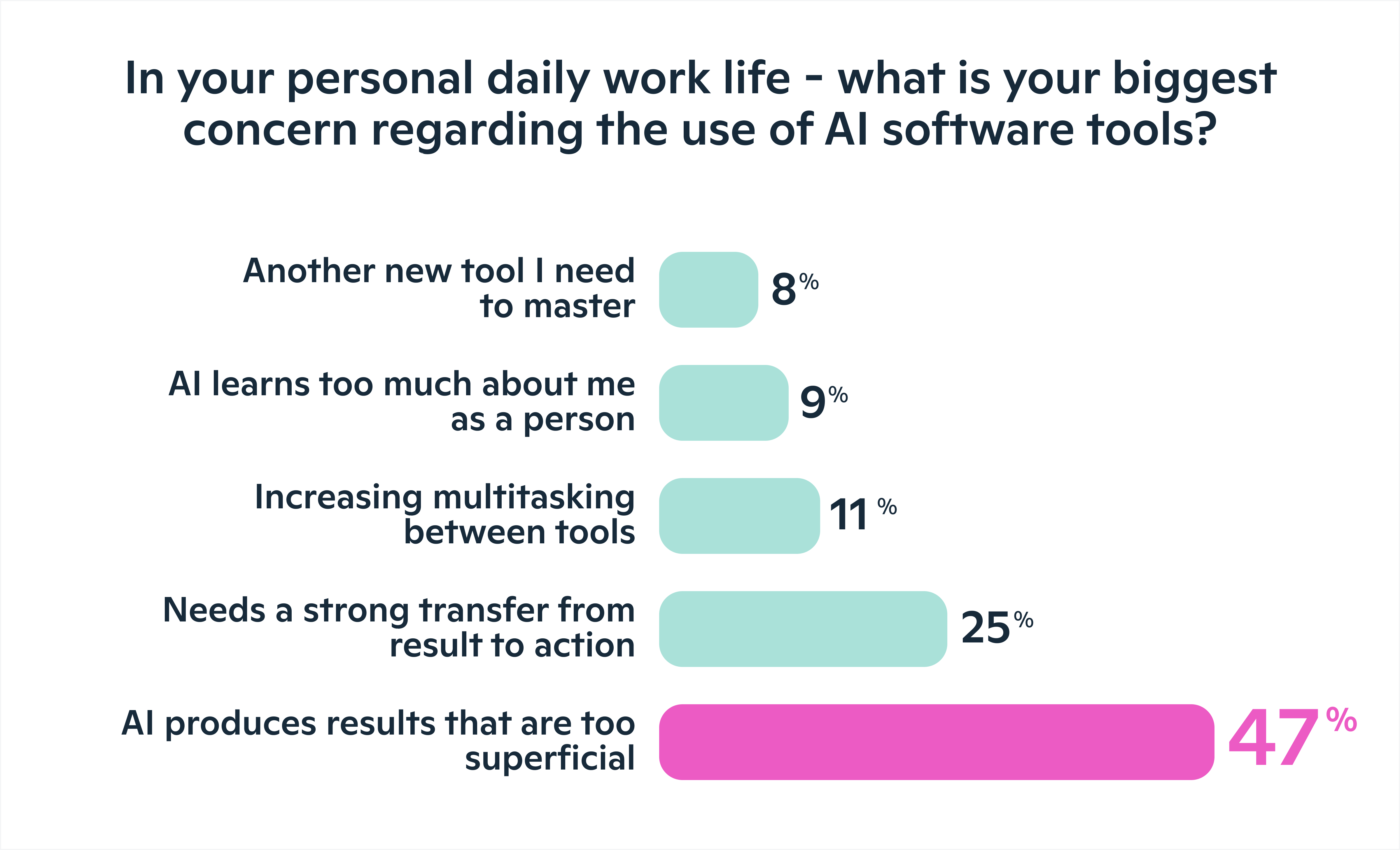
These concerns highlight a key point: Utilities don’t just need AI — they need transparent, explainable AI.
This is where exnaton’s next-generation features come in.
Wattson analyzes billing data, identifies gaps, verifies completeness, and even triggers workflows to re-request missing information automatically.
Instead of navigating multiple tables manually, billing teams simply ask Wattson:
Wattson handles the rest — powered by LLMs and the Model Context Protocol (MCP), which standardizes communication between tools like a universal USB-C plug.
End users can click any invoice to get an instant, step-by-step explanation:
This reduces call-center load and strengthens customer trust — especially when launching new or complex tariff models.
Forecasts are becoming the holy grail of the modern energy system.
Accurate consumption and price forecasts enable:
exnaton combines historical patterns, weather forecasts, and machine learning models to predict consumption and production up to 72 hours ahead.
Utilities can shift from reacting after the fact to steering their systems proactively.
AI in energy isn’t a buzzword — it’s the operating system of the next decade.
By 2035, utilities that have modernized their IT, deployed smart metering, and embedded AI across operations will define the new benchmark for the industry.
Those who act now will:
Those who wait will face higher costs, tighter regulations, and a growing disconnect from digital-first customers.
“AI will not replace people,” Liliane concludes. “But utilities that use AI will outperform those that don’t.”
The transition to an AI-driven energy system is already underway — but you don’t have to face it alone.
With exnaton’s intelligence platform, your utility can move from data silos to intelligent workflows — faster, safer, and smarter.
Partner with exnaton to bring AI into your operations today. Contact us.