
With the introduction of §42c EnWG, Energy Sharing has, for the first time, been firmly anchored in Germany’s energy market design. Citizens, energy cooperatives, municipalities, and companies can now jointly use locally generated renewable electricity via the public grid.
This is more than a regulatory milestone. Energy Sharing is a central building block of a more decentralised and participatory energy system, enabling local generation and consumption to be better aligned and strengthening regional value creation.
However, even though the legal framework now exists, one crucial question remains: how quickly can Energy Sharing actually become available to everyone?
The introduction of §42c EnWG was an important first step. The broad roll-out of Energy Sharing based on this provision currently depends heavily on two factors:
Both are progressing more slowly than market demand. Across Germany, utilities, energy cooperatives, and municipalities are actively developing Energy Sharing offerings, while customers are increasingly looking for ways to participate directly in the energy transition and benefit from locally generated renewable electricity.
The central challenge is clear: if Energy Sharing remains limited to households equipped with smart meters (iMSys), scaling will be constrained for years.
For utilities seeking to launch innovative customer products, waiting is increasingly becoming the greatest risk.
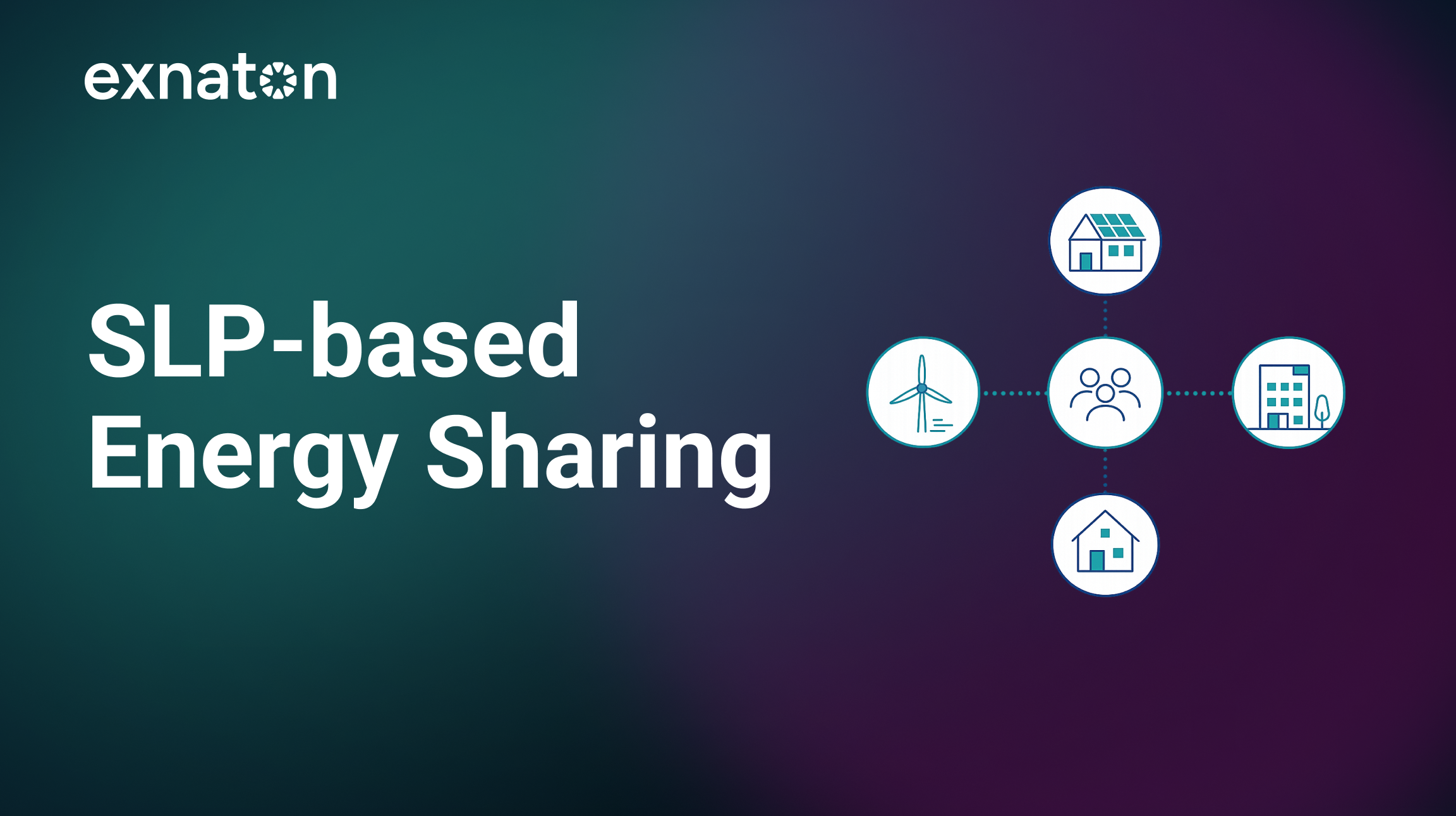
This is where SLP-based Energy Sharing comes into play. It enables participation in Energy Sharing for households that are supplied based on standard load profiles (SLP) and do not yet have an intelligent metering system installed.
Instead of waiting for a nationwide smart meter rollout and upstream processes such as 15‑minute allocation by DSOs, utilities and energy cooperatives can already roll out Energy Sharing offers broadly today. This makes Energy Sharing independent of the current status of smart meter deployment and immediately scalable for the mass market.
The goal is not to replace iMSys-based Energy Sharing. Intelligent metering systems will remain a central element of the future energy system and are essential for more advanced Energy Sharing models, local flexibility services, and dynamic tariffs.
However, restricting Energy Sharing to households with smart meters risks slowing market development precisely at a time when momentum is building. SLP-based Energy Sharing therefore acts as a bridge between today’s market reality and a fully digital energy system of the future.
Over the past years, exnaton has supported utilities and energy communities across Europe in launching and scaling Energy Sharing products. The platform covers the entire Energy Sharing process, including:
One key lesson has emerged: successful Energy Sharing depends on accessibility and simplicity. The easier it is for households to participate, the faster communities grow and the greater the impact on renewable energy adoption.
Markets that have successfully scaled Energy Sharing did not wait for perfect conditions. Instead, they focused on creating participation opportunities as early as possible. Germany now has the opportunity to follow the same path.
Bürgerwerke and exnaton are jointly developing a new offering that goes beyond the minimum requirements of §42c EnWG. The goal is to make Energy Sharing accessible to all households in Germany – including customers with standard load profiles (SLP).
The partnership brings together two pioneers of the energy transition:
The technology provided by exnaton forms the basis of the new offering and is being specifically expanded to fully support SLP-based Energy Sharing.
Together, both organisations share a clear vision:
The extension of exnaton’s platform to support SLP-based Energy Sharing marks an important step towards moving beyond early adopters. Instead of waiting until every household has an intelligent metering system and all market processes are fully implemented, utilities can start building Energy Sharing products that reach customers today.
For the first time, Energy Sharing has the potential to evolve from a niche offering constrained by infrastructure rollout timelines into a true mass‑market product.
Many utilities are currently asking whether they should wait until all regulatory processes are fully finalised before launching Energy Sharing. We believe this is the wrong question.
The more relevant question is: how can utilities start building experience, customer engagement, and operational capabilities today?
Utilities that begin now can:
Most importantly, they can respond to market demand that already exists today.
The long‑term success of Energy Sharing in Germany will depend on making participation as simple and accessible as possible. Energy Sharing should not be limited by the speed of smart meter deployment or by whether a household happens to be among the first to receive an intelligent metering system.
That is why exnaton is expanding its Energy Sharing platform to support SLP-based models and is already working with one of Germany’s leading cooperative energy suppliers to bring this vision to market. The future of Energy Sharing is not about waiting – it is about enabling participation at scale.
And that future starts now.