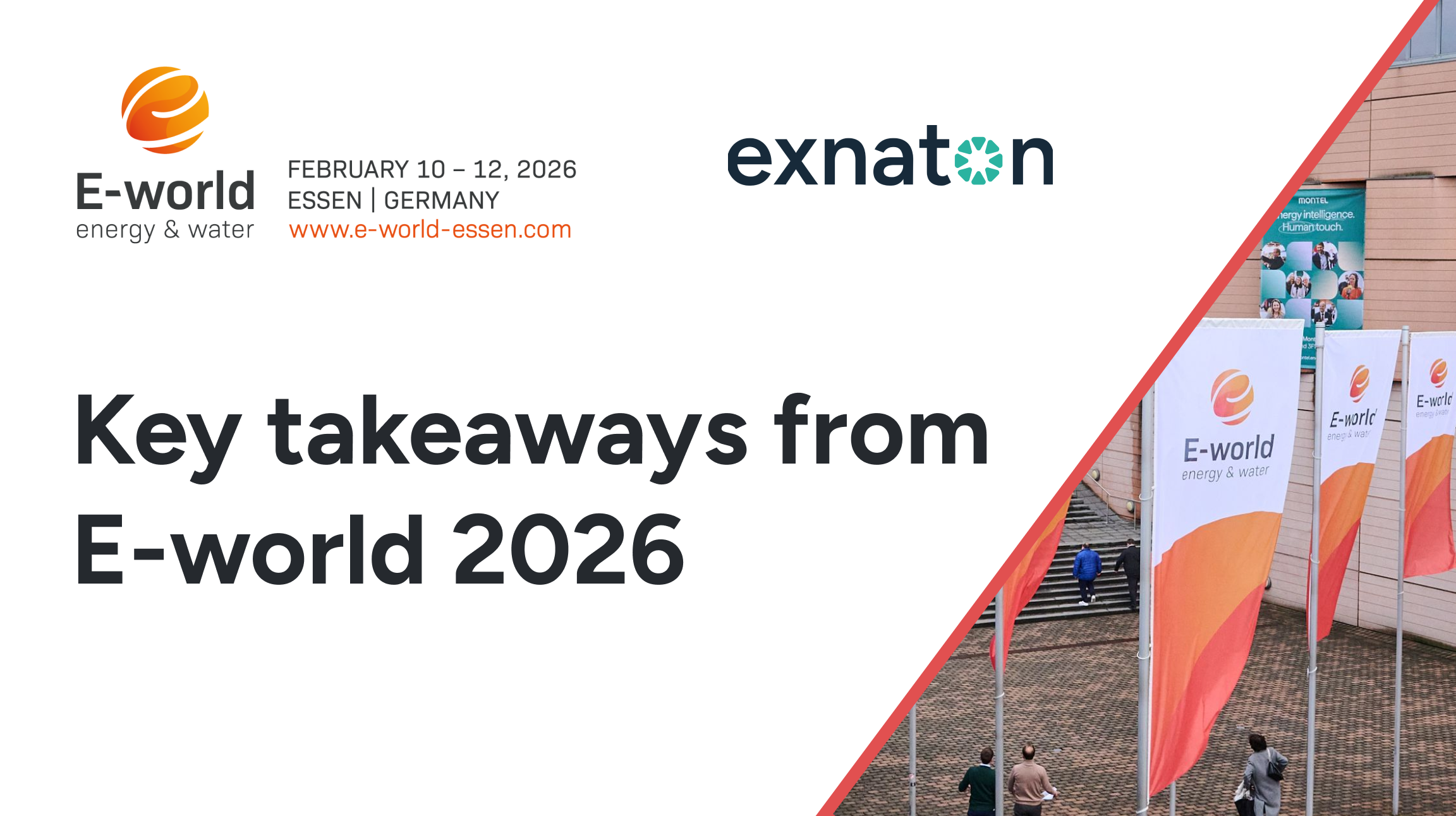

Three intense days in Essen, packed calendars, and countless conversations — E-world energy & water 2026 made one thing unmistakably clear: the energy market is no longer in exploration mode. It’s moving into execution.
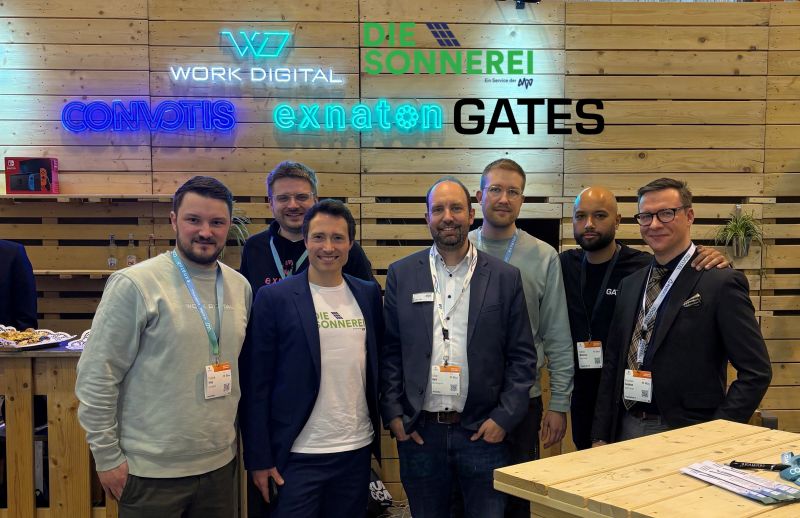
At the joint booth of exnaton together with our partners work digital and CONVOTIS, discussions quickly went beyond “interesting ideas.” Utilities, energy service providers, metering and grid operators , and partners came with concrete questions, real project timelines, and a clear intention to scale.

For years, flexibility was discussed mostly in strategy decks. At E-world 2026, it showed up directly in customer tariffs, contracts, and product roadmaps.
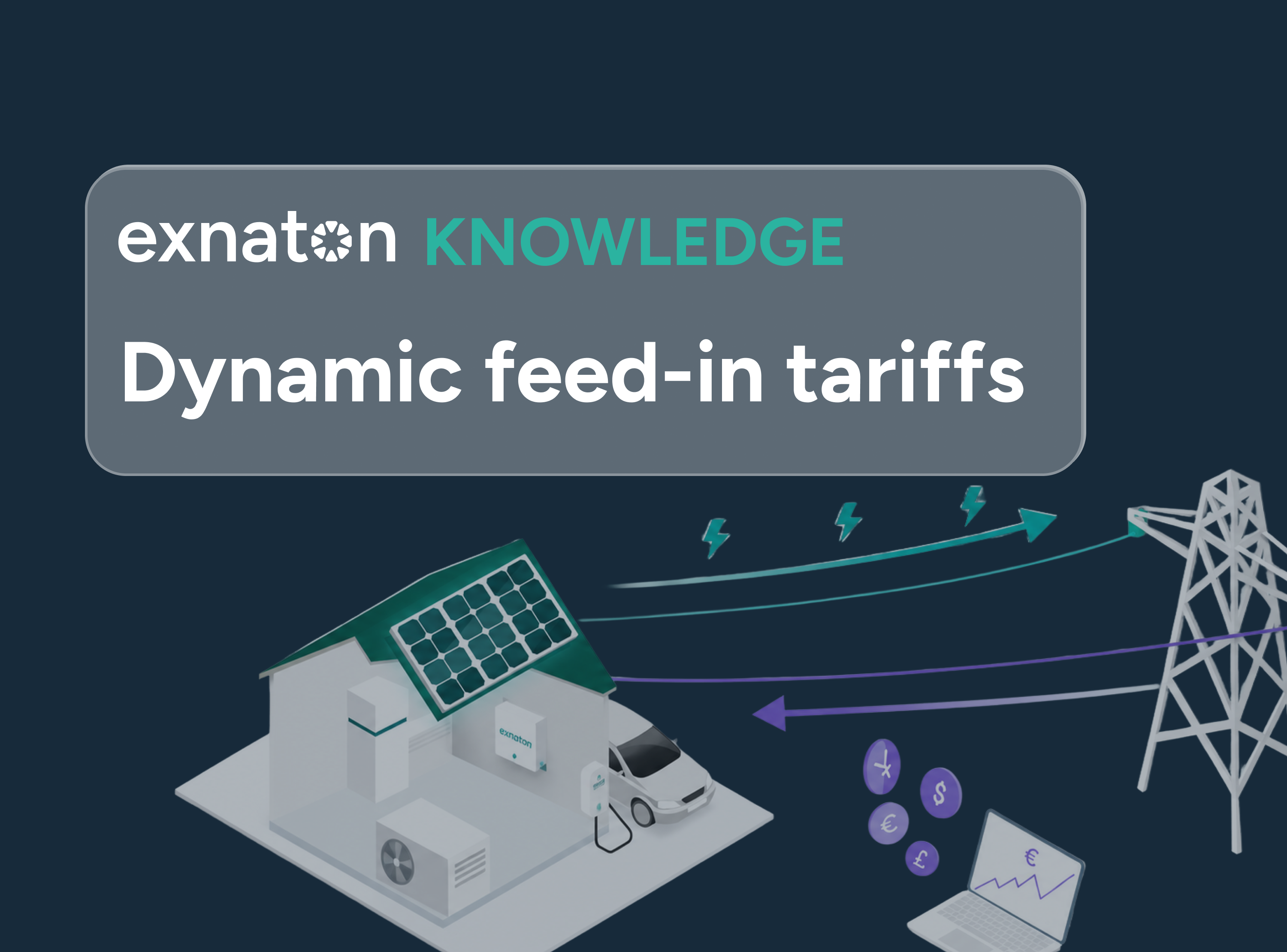
The conversation is no longer limited to dynamic electricity pricing alone. Utilities are increasingly looking at customer-specific tariff models enabled via HEMS integrations. Why? Only when tariffs are combined with HEMS, metering data, and automated optimization does real value creation emerge. So for utilities tariff design becomes more and more a decision about system architectures. Together with partners such as clever-PV, Zerofy, Solar Manager, and other HEMS providers, we are already working on concrete customer projects in this space.
At the same time, interest in residential battery and electric vehicle integration is rising sharply. Projects with partners like FlexHome. Energy confirm what many conversations in Essen suggested: utilities want to actively monetize flexibility on the customer side — but they need systems that can handle the time-series complexity behind it.
Another strong signal from the exhibition floor: producers are actively searching for new marketing routes following recent EEG developments.
To use subsidiy-free direct marketing of PV or Power Purchase Agreements (PPAs) for energy sharing in balancing group models came up repeatedly as one of the key answers — particularly in B2B and municipal contexts. Alongside this, the efficient handling of the so-called “small-scale direct marketing” model was heavily discussed.
From our perspective, the direction is clear. With growing PV capacity, pressure from sustainability roadmaps, and economic incentives aligning, energy sharing in supplier models is moving from concept to implementation.
Utilities are approaching the topic with different levels of maturity. Some want to actively use it in B2B sales. Others are still mapping end-to-end processes before scaling. But across the board, one insight keeps resurfacing: complex electricity products can no longer be managed reliably in spreadsheets. Automated time-series allocation and transparent site-level billing are becoming true differentiators.
For years, tenant electricity has been “almost there.” This year in Essen, it felt different.
We are already involved in implementation projects with several utilities, and the pipeline continues to grow. What utilities are now clearly demanding is deeper automation and tighter core system integration — especially with environments like SAP S/4HANA.
The interest in two-tier tenant electricity tariffs is also increasing. The underlying message from many conversations was consistent: only when Mieterstrom processes run as a normal, automated flow inside the core system will real scaling become possible — including tariff diversity and a smooth customer experience.
By now, almost every utility offers some form of dynamic tariff. But many openly admit that true scalability is still ahead of them.
What stood out at E-world 2026 was how the conversation is evolving. Utilities are no longer asking whether to offer dynamic pricing — they are exploring how to make it smarter and more differentiated.
We saw growing interest in:
Especially the coupling between flexibility monetization and prosumer tariffs is gaining traction. And as stated above - always connected with flexibility and architecture decisions. In markets like Belgium, where such models are already being implemented, this is moving quickly from pilot to product.
Perhaps the most important takeaway from E-world 2026 was not a single technology trend — but a shift in mindset.
One sentence we heard repeatedly at the booth was:
“If we implement dynamic tariffs with you, we can basically think energy sharing and other tariffs along the way.”
That captures the market moment perfectly.
Utilities are increasingly moving away from isolated point solutions toward platform thinking. Once a time-series-capable platform is in place, new use cases — from prosumer tariffs to energy sharing — can be tested and launched far faster than many expect.

Beyond all the technology discussions, one thing stood out: the intensity and openness of the exchange.
Back-to-back meetings, half-hour conversations, many familiar faces and many new ones — and a strong sense that the industry is picking up speed together.
The structural shift in the energy market is no longer theoretical. It is unfolding now.
A big thank you to everyone who stopped by our joint booth and to our partners work digital and CONVOTIS for the excellent collaboration.
If we didn’t get a chance to talk in Essen — or if you’re now looking to turn flexibility into scalable energy products — contact us.