Spain’s electricity market is entering a new phase. With the publication of Real Decreto 88/2026, dynamic electricity pricing is moving from a niche or regulated-market concept into a broader requirement for the liberalized retail market. From June 2026, electricity retailers with more than 200,000 customers will be required to offer dynamic price contracts to eligible consumers. The regulation also strengthens consumer protection, transparency, pre-contractual information, and the role of aggregation in the electricity system.
For Spanish utilities and electricity retailers, this is more than a compliance topic. Dynamic pricing creates a new foundation for flexible, customer-centric energy products. It allows retailers to connect wholesale market signals, grid-related costs, customer consumption data, and distributed energy assets such as electric vehicles, heat pumps, batteries, and solar PV systems.
A dynamic electricity price contract reflects changes in wholesale electricity markets, including day-ahead and intraday markets. The EU Electricity Directive 2019/944 defines dynamic electricity price contracts as supply contracts where the electricity price reflects variation in spot markets at intervals at least equal to the market settlement frequency.
In practice, this means that electricity prices can change hourly or even every 15 minutes, depending on the market and settlement structure. For Spain, where smart meter deployment is already advanced and 15-minute market settlement is becoming increasingly relevant, dynamic pricing can become a powerful tool for connecting consumers more directly to real system conditions.
However, dynamic pricing is not simply about showing customers the wholesale market price. The end customer does not pay only the spot price. A meaningful dynamic tariff must combine the energy price with access tariffs, taxes, regulated charges, margins, and other price components. Only then does the customer receive a usable signal that reflects what they will actually pay.
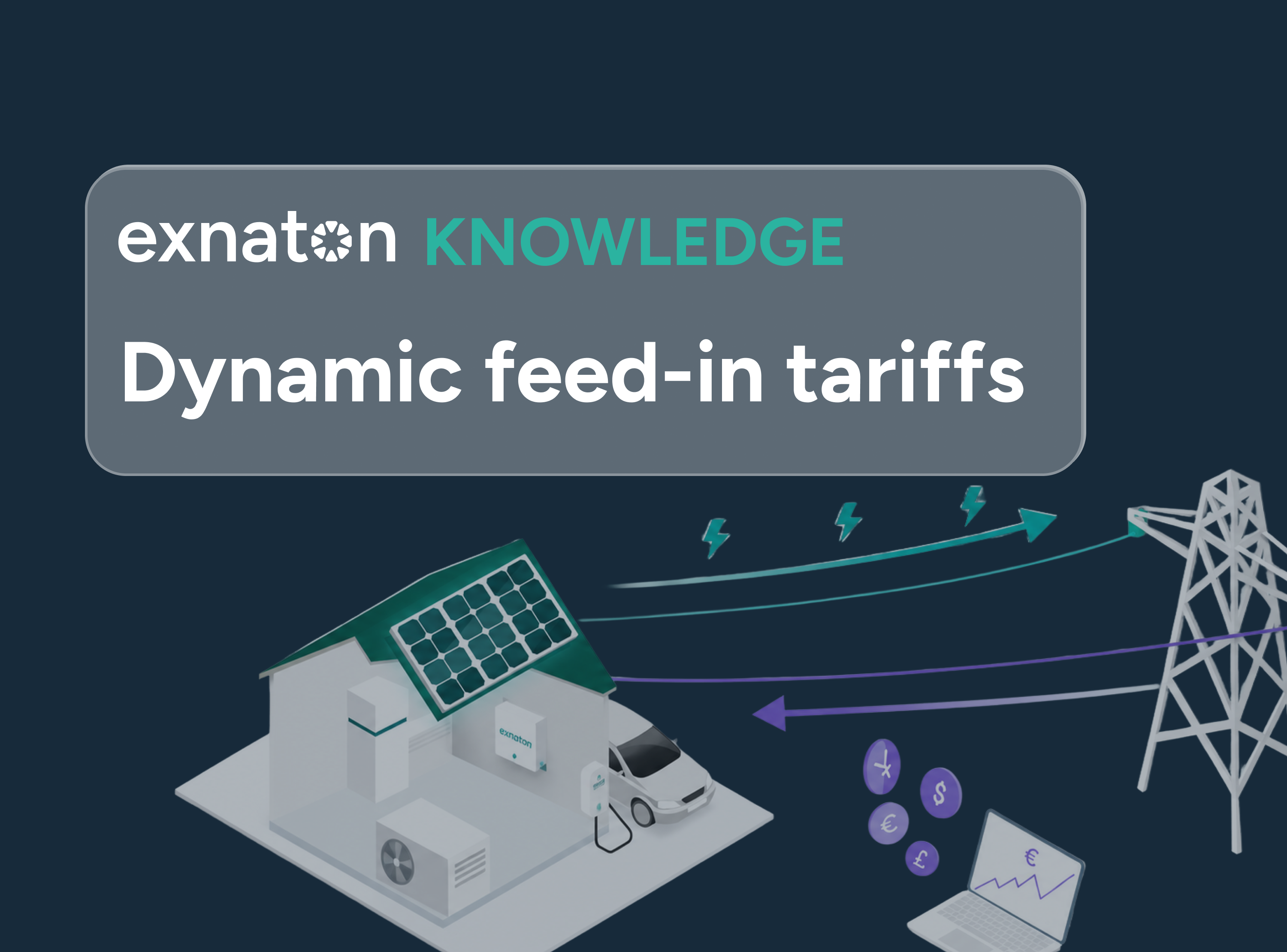
Dynamic electricity prices help shift flexible consumption into periods when electricity is cheaper, cleaner, or more abundant. This is especially relevant for controllable loads such as electric vehicles, heat pumps, batteries, and some industrial or commercial processes.
When customers respond to granular price signals, the electricity system can absorb more renewable energy, reduce peak demand, and lower the need for costly balancing and adjustment services. In markets with high solar and wind penetration, this flexibility becomes increasingly important.
Dynamic pricing also supports a more active role for consumers. Instead of being passive recipients of fixed electricity products, customers can adjust consumption, automate devices, and benefit from market conditions. But this only works if the price signal is clear, transparent, and actionable. The full value of dynamic pricing is only unlocked when price signals can be automated through Home Energy Management Systems (HEMS) and connected assets.
Recent system stress events in Spain have highlighted the importance of operating margins and demand responsiveness. While dynamic pricing is not a direct solution to such events, a more price-responsive demand could have contributed to safer operating conditions by reducing peak loads, alleviating local congestion, and increasing system flexibility.
In this sense, dynamic pricing — especially when combined with granular grid signals — is not only a commercial tool, but also a structural lever to improve system resilience.
Real Decreto 88/2026 updates Spain’s framework for electricity supply, commercialization, and aggregation. One of the most important changes is the requirement for electricity retailers with more than 200,000 customers to offer dynamic price contracts from June 2026.
The regulation also introduces stronger requirements around consumer information. Before signing a dynamic price contract, customers must be informed about the opportunities, costs, and risks of this type of product. They must also receive an estimated monthly bill so they can understand the potential impact before contracting.
Beyond dynamic prices, the regulation reorganizes parts of the electricity retail model. It strengthens consumer protection, introduces new operational and data requirements, develops the role of independent aggregators, and opens the door to more complex contractual models, including combinations of supply contracts, aggregation services, PPAs, self-consumption, and potentially multiple retailers for the same supply point.
A particularly relevant evolution is the possibility to move beyond one single supply contract per customer. The new framework opens the door to more modular and combinable architectures, including multi-retailer setups, aggregation services, PPAs, and self-consumption schemes coexisting within the same supply point.
This “multi-utility” or multi-contract paradigm is a structural shift: instead of selling one product, retailers orchestrate multiple value streams (energy, flexibility, local generation, market exposure) around the customer.
For retailers, dynamic pricing can become a competitive advantage. It reduces exposure to fixed-price risk, creates space for more innovative products, and helps attract high-value customers with flexible assets such as EVs, heat pumps, batteries, or solar PV.

It also creates a stronger customer relationship. When customers use a portal, app, or automated energy management system to monitor prices and optimize consumption, the retailer becomes more than a commodity supplier. It becomes a digital energy partner.
This opens the door to cross-selling and new services: EV charging optimization, home energy management, solar-plus-battery offers, energy communities, PPAs, flexibility products, and local dynamic tariffs.
The main challenge is not only defining the price formula. The real bottleneck is operational.
Retailers need to calculate prices at hourly or quarter-hourly resolution, match them with customer consumption data, apply taxes and regulated components, generate transparent bills, and make the logic understandable for customers. Existing ERP, CRM, and billing systems were often not designed for this level of product complexity.
Without the right digital layer, dynamic pricing can become slow, expensive, and difficult to scale.
exnaton enables utilities and electricity retailers to launch smart, data-driven electricity products without replacing their existing ERP or billing systems. The platform works as a modular software layer that integrates with existing systems and handles complex tariff logic, time-series data, customer-specific pricing, billing preparation, and customer-facing transparency.
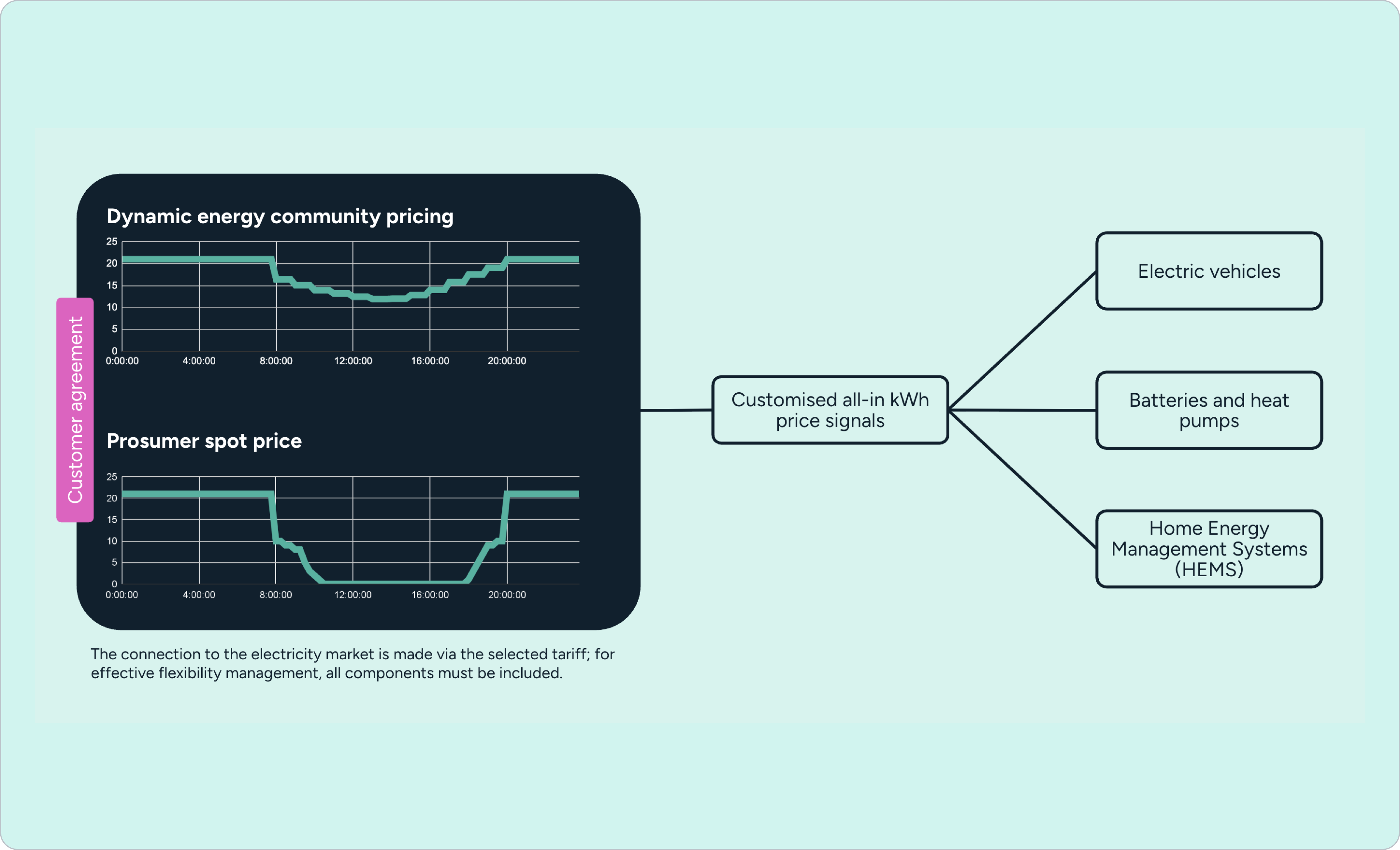
For dynamic pricing, this means retailers can create tariffs based on spot market indices, add risk premiums or margins, include fixed or variable components, and apply customer-specific logic. The platform can also support more advanced products such as local dynamic tariffs, energy community pricing, time-of-use products, Happy Hour tariffs, PPAs, and EV smart charging.
A key point from the webinar was that dynamic pricing becomes most valuable when the customer can act on it. exnaton therefore supports not only tariff creation and billing, but also white-label customer portals and integrations with flexible assets. For example, a customer’s individual price signal can be sent directly to an electric vehicle, allowing charging to shift automatically into cheaper or renewable-rich hours.
Dynamic pricing is the first step toward a more flexible electricity retail model. Once utilities can combine granular consumption data, dynamic price signals, customer contracts, and asset integrations, they can launch a much broader range of products.
These include dynamic tariffs for residential customers, flexible EV charging products, energy community models, prosumer tariffs, PPA-based supply models, local dynamic pricing, and eventually grid-aware tariffs that reflect congestion and local system needs.
This is where the Spanish market could evolve next. The European trend suggests that dynamic pricing may not remain limited to large retailers or to the energy component only. Over time, more granular and dynamic access tariffs may also become relevant, as already seen in discussions and developments in other European markets.
Spanish retailers should treat Real Decreto 88/2026 as a trigger to modernize product infrastructure. The first question is not only “How do we comply?” but “How do we use this as a foundation for future energy products?”
The utilities that move early will be better positioned to attract flexible customers, reduce operational risk, and launch differentiated offers before dynamic pricing becomes standard across the market.
The next generation of electricity products will not be built around one fixed price for everyone. They will be built around customer-specific signals, flexible assets, transparent billing, and automation. Dynamic pricing is the regulatory entry point — but the real opportunity is much bigger.
Contact us today to learn how exnaton can support launching dynamic tariffs in Spain.