
How MVV Energie’s Die Sonnerei enabled location-independent PV sharing and dynamic tariffs with exnaton

Bringing an MVP to market quickly, testing it and then developing it iteratively in a very short time – that was something we hadn’t done before.
Key Results
The project showed that a highly complex tariff model combining solar power allocation with dynamic prices can be successfully delivered to residential customers.
- 42% energy self-sufficiency
- 66% use of solar generation
- 5 months to build a fully functional MVP
- 16 customers successfully connected across several cities and distribution grid areas
- Fully digital customer journey from contract signing to billing
With the MVP, we proved the model was feasible and created a foundation for the future.
Launch new energy products with exnaton?
Book a demoCustomer
Die Sonnerei is an innovation initiative and a service by MVV Energie that enables customers to participate in solar energy without owning a PV system. Through a dynamic electricity tariff linked to an external PV installation, users could secure a share of solar generation, benefit from real-time prices and manage their energy use entirely digitally.
Founded by Julian Bott, Benedikt Herbert and two other MVV employees, Die Sonnerei developed a unique energy-sharing model. It enabled customers to benefit directly from solar power generated by selected PV systems even if they lived in a city apartment or a multi-family building.
The Challenges
- Limited access to solar energy for customers in cities
- Infrastructure and regulatory barriers to energy sharing
- Direct marketing of PV electricity and balancing group management
- High product and process complexity
- Limited availability of smart meters
Developing a product like Die Sonnerei meant overcoming several structural and operational hurdles.
The central challenge was that most customers have no direct access to renewable generation. Traditional models, such as installing a PV system on your own roof or sharing self-generated electricity in multi-family buildings, are difficult to scale and not accessible to everyone.
The product also required a completely new tariff logic that brought several components together:
- Customer-specific shares of solar generation through a shared participation model
- Allocation of consumption and generation at 15-minute intervals
- Dynamic prices based on the spot market
This created considerable complexity in billing, energy allocation and system integration.
Infrastructure was another major challenge:
Smart meters are essential and at the same time a major hurdle, especially in multi-family buildings.
– Benedikt Herbert, Co-founder & Senior Product & Innovation Manager
Without smart meters, neither energy allocation nor dynamic price calculation is possible. The rollout therefore depends in part on external conditions.
The Solution
What exnaton provided:
- Allocation of consumption and solar shares at 15-minute intervals
- Automated tariff calculation based on actual consumption
- Integration of dynamic prices and market signals
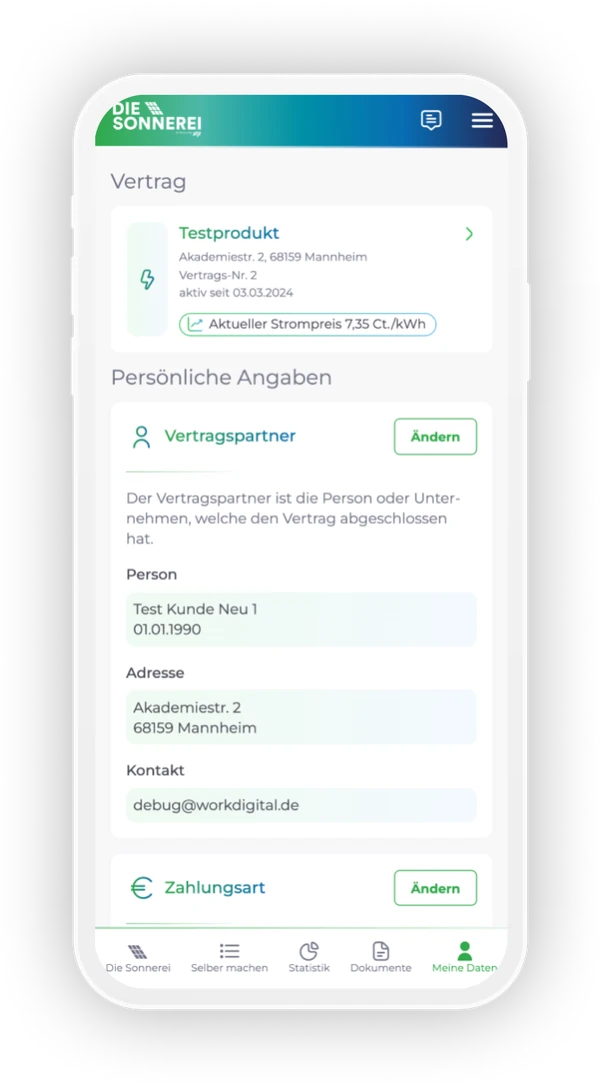
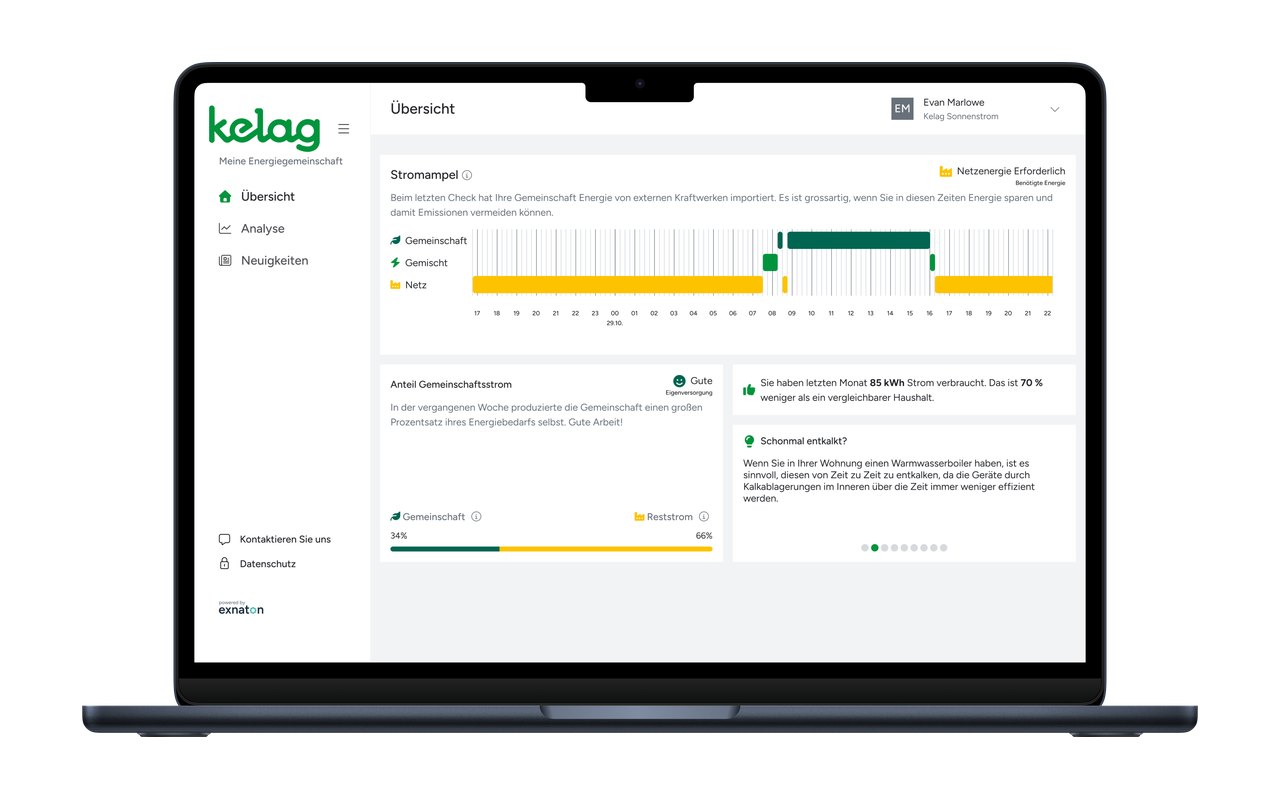
- Customer experience integrated into the Die Sonnerei app through web components
To bring the product to life, Die Sonnerei partnered with exnaton. exnaton handled the most complex part of the system: processing and allocating energy data based on 15-minute meter readings.
At the heart of the solution is exnaton’s platform, which enables:
- Allocation of each participant’s consumption and solar shares at 15-minute intervals
- Automated tariff calculation based on actual consumption
- Integration of dynamic prices and relevant market signals
exnaton models the complexity of this tariff product and matches consumption and generation time series.
– Benedikt Herbert, Co-founder & Senior Product & Innovation Manager
This allows customers to:
- Secure a share in a specific solar installation
- Use locally generated solar power when it is available
- Automatically sell surplus generation or purchase additional energy at dynamic prices
The entire offering was delivered through a fully digital customer journey, including:
- Digital contract signing
- Integration of smart meter data
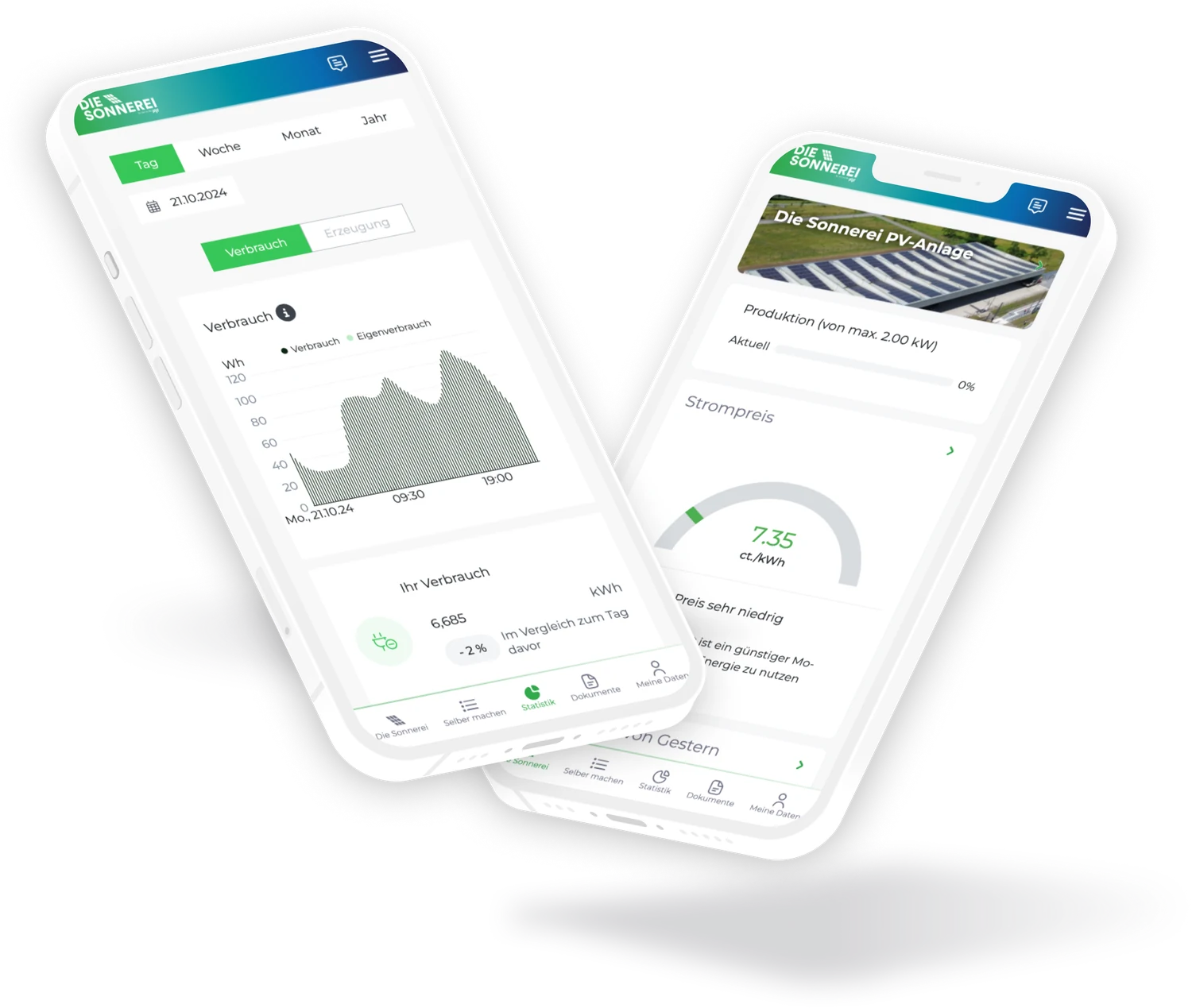
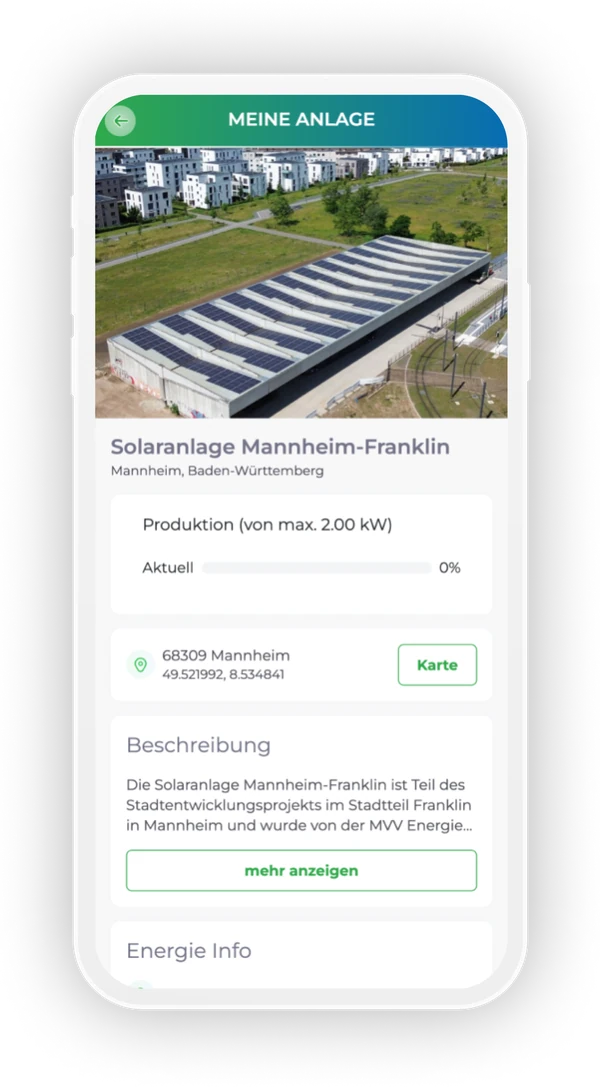
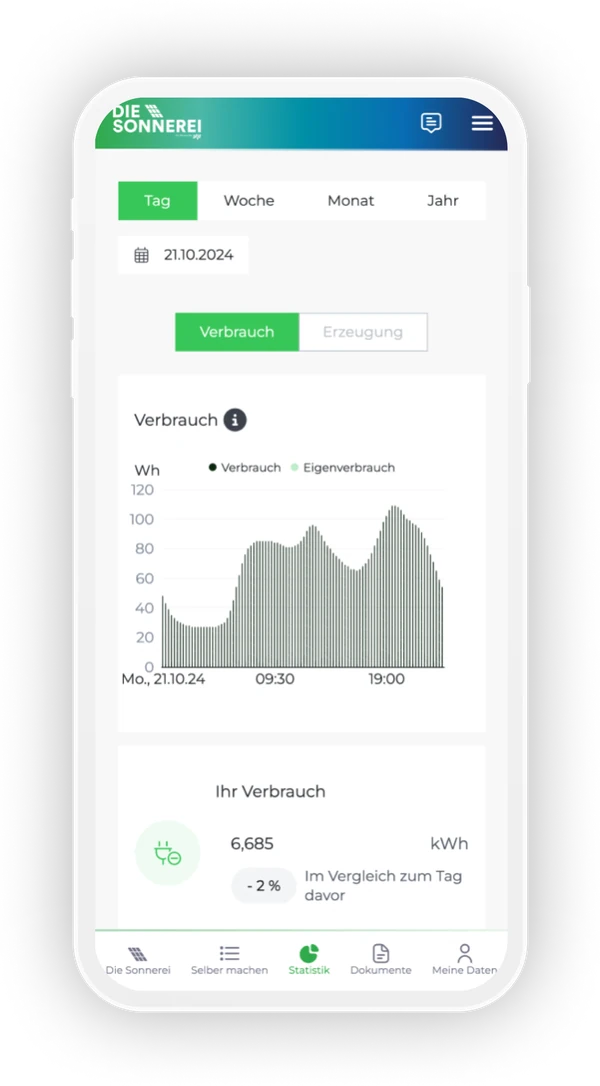
- A mobile app as the central user interface
- Up-to-date insights into prices, consumption and solar generation
The app plays a key role in making energy understandable and tangible for customers:
The app makes the personal energy transition visible and tangible.
– Julian Bott, Idea generator and co-founder
The solution also relies on a strong partner ecosystem. Within the modular architecture, exnaton serves as the central intelligence layer.
The Result
The project produced a validated, scalable blueprint for next-generation energy products.
Customers responded positively to both the concept and the digital user experience, confirming strong demand for:
- Transparent pricing
- A direct connection to renewable energy
- More control over their energy consumption
At the same time, the project fundamentally changed how innovation can be delivered within an energy utility:
Bringing an MVP to market quickly, testing it and then developing it iteratively in a very short time—that was something we hadn’t done before.
– Julian Bott, Idea generator and co-founder
Although external factors such as the smart meter rollout continue to pose a constraint, the pilot clearly showed that energy sharing is more than a theoretical concept: it can be a viable product model.
The team is convinced:
We firmly believe in energy-sharing solutions and their potential for the future.
– Benedikt Herbert, Co-founder & Senior Product & Innovation Manager
Conclusion
The Die Sonnerei project shows how energy utilities can move from an idea to a market-ready product within a few months, without replacing their core systems.
With exnaton, energy utilities can:
- Bring complex tariff models to market quickly
- Integrate renewable generation into customer offerings
- Create fully digital, customer-centric experiences
This use case shows that the future of energy supply lies in flexible, intelligent and accessible products and that future is already within reach.


Become our next success story
See in a demo how exnaton helps you launch new energy products quickly – without a major IT migration.